Introduction to Rustic Christmas Villages
There’s something magical about setting up a Christmas village during the holiday season. When I first started collecting pieces for my own rustic Christmas village display, I was drawn to the warm, nostalgic feeling these miniature worlds create. Unlike their more polished counterparts, rustic villages with farmhouse style bring an authentic, lived-in charm that feels like coming home.
I’ve found that these displays evoke memories of simpler times—perhaps a childhood visit to grandma’s farm or a weekend getaway to a mountain cabin. The beauty of rustic Christmas villages lies in their imperfections and natural elements, creating scenes that feel both timeless and deeply personal.
Over the years, I’ve experimented with various approaches to creating these displays, and I’m excited to share what I’ve learned about bringing farmhouse charm to your holiday decorating.
Choosing the Right Rustic Elements
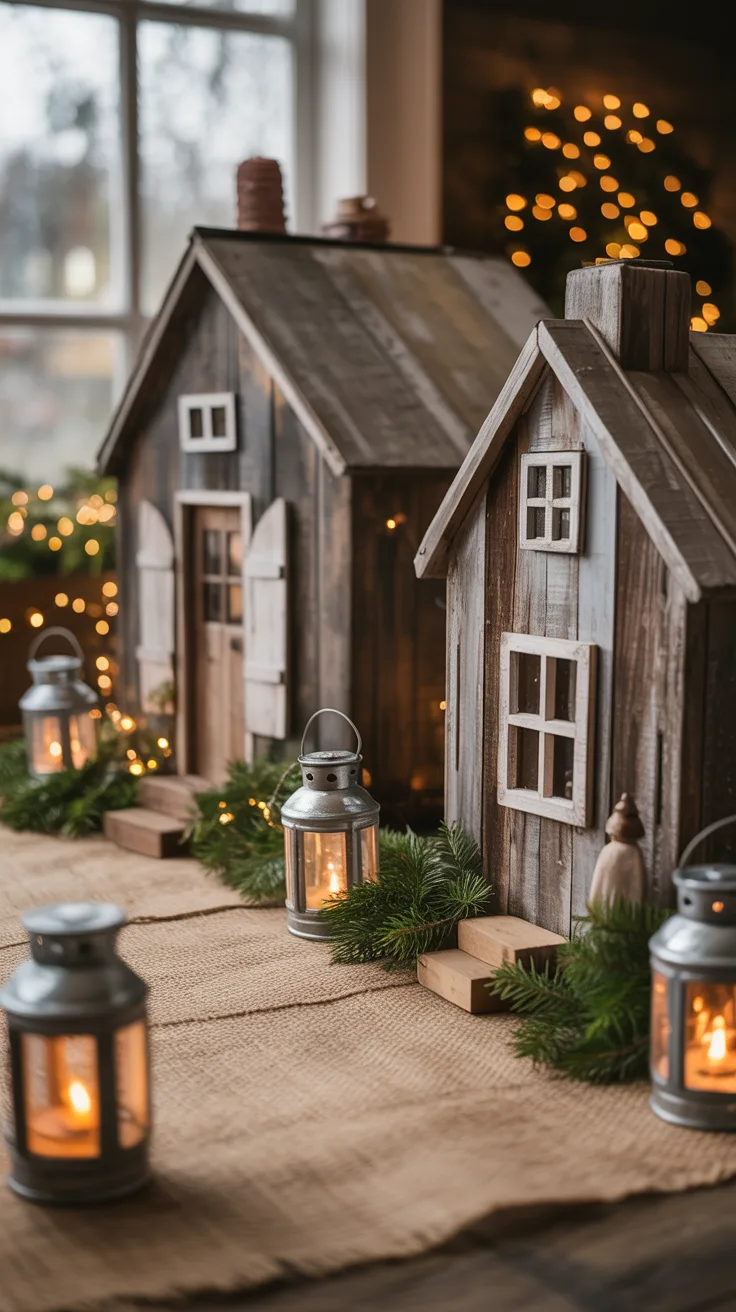
The foundation of any successful rustic Christmas village is in the materials you choose. I learned this the hard way my first year when I tried mixing ultra-modern, glittery pieces with my rustic elements—the result was visually confusing rather than cohesive!
Now I focus on materials that naturally complement each other and enhance that farmhouse feel:
- Wood: Weathered, distressed, or barn wood pieces form the backbone of rustic displays. I love using tiny wooden houses with imperfect edges and natural grain showing through.
- Natural fibers: Burlap, jute, and cotton add texture as base layers, pathways, or tiny decorative elements.
- Metals: Galvanized tin, copper, and wrought iron accents (like miniature lanterns or tiny farm equipment) add authentic farmhouse character.
- Stone and ceramic: Pieces that mimic fieldstone, brick, or handmade pottery complement the natural aesthetic.
- Natural elements: Pine cones, dried moss, twigs, and small branches bring the outdoors in.
Pro Tip: I’ve found that limiting my color palette to neutrals (whites, creams, browns) with strategic pops of traditional Christmas red and green helps maintain that authentic farmhouse look. One year I went overboard with colors, and my village looked more carnival than country!
Incorporating Farmhouse Style
Farmhouse style is having its moment in home décor, but I’ve loved this aesthetic long before it became trendy. What makes it perfect for Christmas villages is its emphasis on simplicity, functionality, and comfort—qualities that translate beautifully to miniature displays.
Here’s how I bring farmhouse charm to my rustic Christmas village displays:
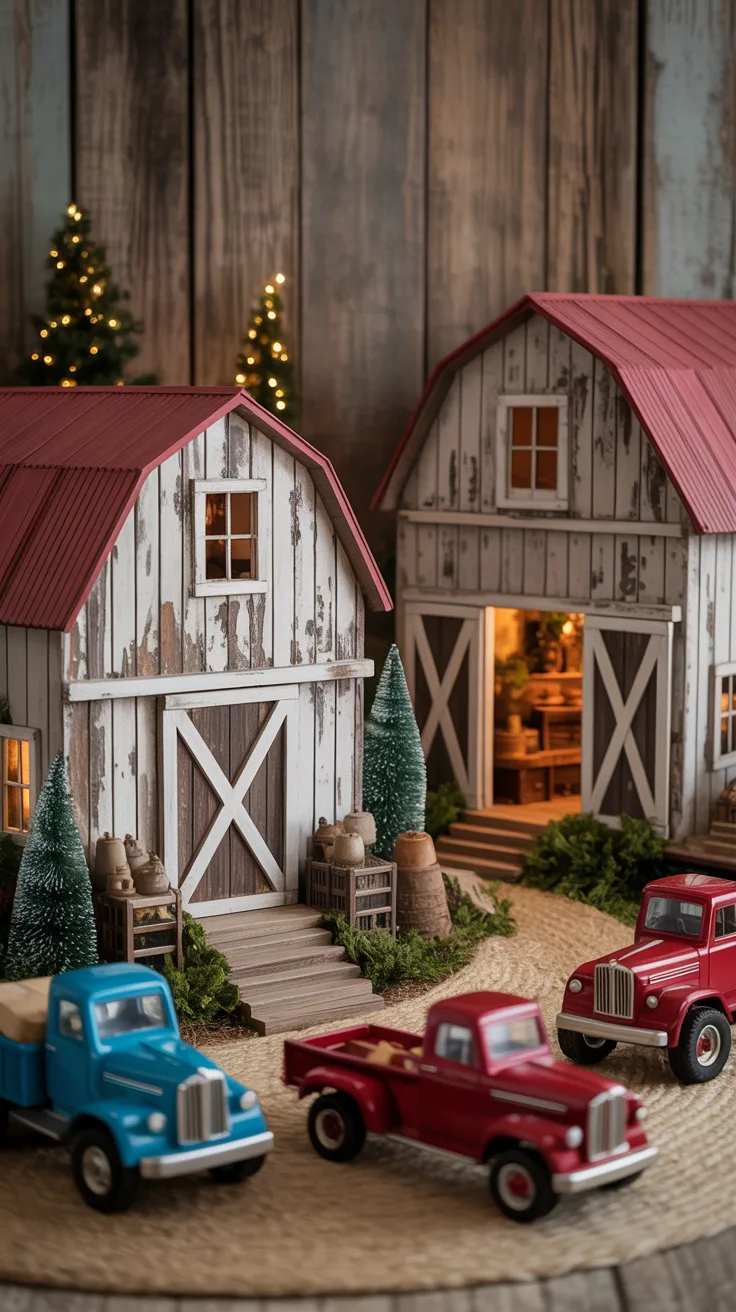
- Weathered finishes: I look for buildings with distressed paint, exposed wood, or whitewashed surfaces.
- Architectural details: Pieces featuring barn doors, shutters, pitched roofs, and wraparound porches capture that farmhouse essence.
- Practical scenes: Vignettes showing daily farm life—gathering eggs, chopping wood, or hanging laundry—add authentic charm.
- Vintage vehicles: Old-fashioned trucks, tractors, or horse-drawn wagons enhance the nostalgic feel.
- Handcrafted look: Imperfect, slightly asymmetrical pieces that appear handmade rather than mass-produced.
Pro Tip: Don’t feel limited to store-bought village pieces. Some of my most treasured elements are ones I’ve customized myself. I once transformed a too-modern ceramic house by dry-brushing it with white paint and adding tiny twigs for porch columns—it’s now the centerpiece of my display!
14 Inspiring Rustic Christmas Village Ideas
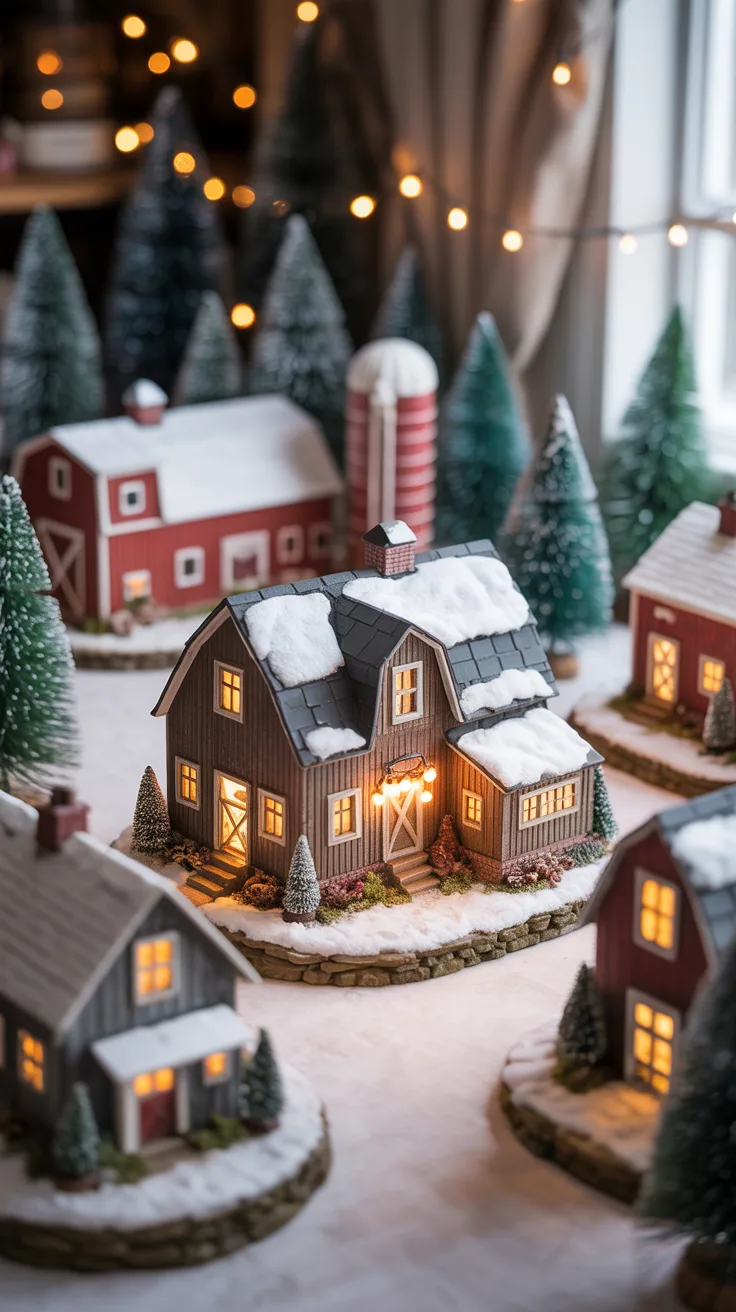
After years of creating these displays and shamelessly peeking at others’ creations, I’ve gathered quite the collection of ideas. Here are 14 of my favorite concepts for rustic Christmas village displays with farmhouse style:
- Winter Farmstead: Create a central farmhouse with surrounding barns, silos, and animal pens. I use cotton batting for snow and tiny hay bales for authenticity.
- Woodland Cabin Retreat: Arrange log cabins nestled among miniature evergreens, with a frozen “lake” made from a mirror or blue-tinted glass.
- Country Church Gathering: Center your display around a white-steepled church with parishioners arriving via horse-drawn sleighs and old trucks.
- Maple Sugar Shack: Build a scene around a sugar shack with tiny sap buckets on trees and smoke rising from the chimney.
- Rustic Main Street: Create a small-town feel with wooden storefronts, vintage streetlamps, and shoppers carrying packages.
- Christmas Tree Farm: Display rows of different-sized bottle brush trees with a small cabin and vintage truck loaded with freshly cut trees.
- Winter Barnyard: Focus on farm animals with a red barn, split-rail fences, and miniature livestock wearing tiny scarves.
- Covered Bridge Scene: Build around a wooden covered bridge spanning a “frozen” stream with ice skaters below.
- Country General Store: Feature a detailed general store with tiny produce crates, barrels, and a pot-bellied stove.
- Snowy Mill: Center your display around a water mill with a motionless wheel “frozen” in winter.
- Sleigh Ride Hill: Create a sloped display with children sledding and adults watching from a rustic gazebo.
- Homestead Christmas: Show a family-centered scene with activities like decorating a tree, baking cookies, and hanging stockings.
- Winter Farmers Market: Arrange small booths with holiday greenery, handcrafted gifts, and seasonal produce.
- Firewood Gathering: Display a scene of figures collecting and chopping wood for winter, with stacked logs and a cozy cabin nearby.
Pro Tip: I’ve found that focusing on one main concept rather than trying to incorporate every idea creates a more cohesive and visually appealing display. My most successful village was built entirely around a maple sugaring theme, with every element supporting that central story.
Pro Tips for a Cohesive Display
Creating a cohesive display takes more than just collecting beautiful pieces. Through plenty of trial and error (including one memorable year when my village kept collapsing because I built it on an unstable base), I’ve developed some strategies for pulling everything together:
Start with a solid foundation: I use a combination of foam insulation boards covered with fabric for my base. This allows me to create different elevations and secure pieces firmly in place.
Consider scale carefully: Nothing disrupts the illusion faster than mismatched scales. I learned this when I placed a giant Santa next to a tiny house—it looked like a holiday horror movie! Now I ensure all my pieces work together proportionally.
Create depth with layering: I arrange my villages with smaller buildings in front and larger ones toward the back, with varying heights throughout. This creates a more realistic perspective and allows more pieces to be visible.
Light with intention: Lighting transforms a good display into a magical one. I use a combination of string lights, battery-operated tea lights, and the built-in lights of some pieces. I place lights strategically to create warm glows in windows and soft illumination on pathways.
Add movement and life: Static displays can feel lifeless. I incorporate figures engaged in activities—children building snowmen, farmers feeding animals, shopkeepers sweeping storefronts—to bring energy to the scene.
Tell a story: My most memorable displays are ones where I’ve created a narrative. Perhaps it’s Christmas Eve in a small farming community, or the morning after a fresh snowfall. This storytelling approach guides my placement of every element.
Pro Tip: Take photos of your display before dismantling it each year. I keep a small album of my past villages, which helps me remember what worked well and gives me ideas for the next holiday season.
Frequently Asked Questions
What materials are best for a rustic Christmas village?
Natural materials create the most authentic rustic look. I’ve had the best results with wood, burlap, galvanized metal, and natural elements like pine cones and twigs. I avoid anything too shiny, glittery, or plastic when aiming for that farmhouse feel. Even when I use synthetic materials, I look for ones that mimic natural textures.
How can I incorporate lighting into my village display?
Warm lighting is essential for creating that cozy farmhouse ambiance. I prefer warm white LED string lights tucked throughout the display, along with battery-operated tea lights placed inside buildings with translucent windows. For a truly rustic touch, I sometimes use miniature lanterns with flickering LED candles on pathways and porches. Just be sure to keep fire safety in mind—I always turn off all lights when I’m not home.
What are some budget-friendly ways to create a rustic look?
Some of my favorite village elements were the least expensive! Try repurposing items like small wooden crates for buildings, using cinnamon sticks for log piles, or crafting tiny wreaths from dried moss and twine. I’ve found wonderful pieces at thrift stores that I’ve upcycled with a bit of paint. Natural elements like pinecones, acorns, and small branches make perfect trees and landscape features—and they’re free if you collect them yourself.
How do I store my Christmas village after the holidays?
Proper storage is crucial for preserving your collection. I learned this the hard way after finding several broken pieces one year. Now I wrap each building individually in acid-free tissue paper, then place them in plastic storage bins with dividers. For particularly delicate items, I use bubble wrap. I store natural elements separately and replace them each year, as they tend to deteriorate. I also keep all my village pieces in a climate-controlled area to prevent damage from humidity or temperature fluctuations.
Can I mix rustic elements with modern pieces?
While I generally recommend maintaining a consistent style, thoughtful mixing can work if done carefully. I sometimes incorporate a few modern elements as long as their colors and materials complement the rustic theme. For instance, a contemporary ceramic house might blend in if it has a simple design and neutral color. The key is ensuring these modern pieces don’t draw attention to themselves as being different from the overall aesthetic. When in doubt, I find it’s better to err on the side of consistency.