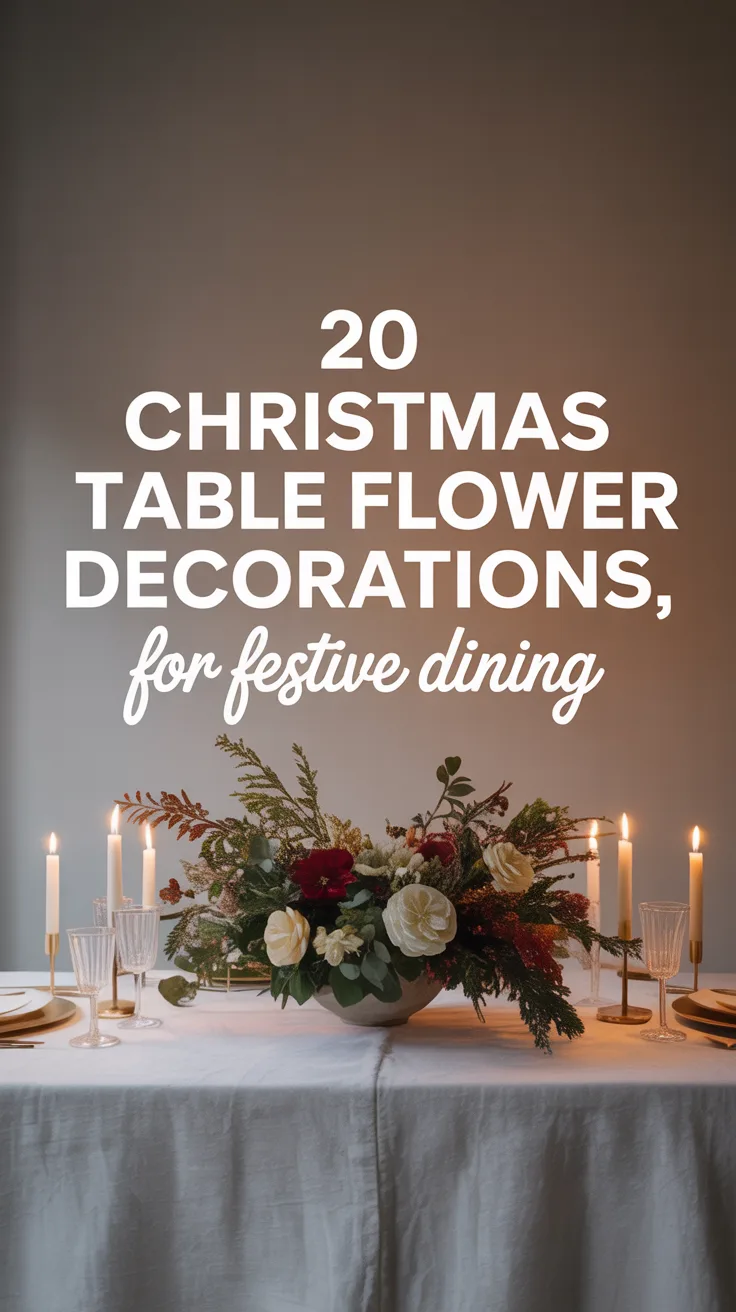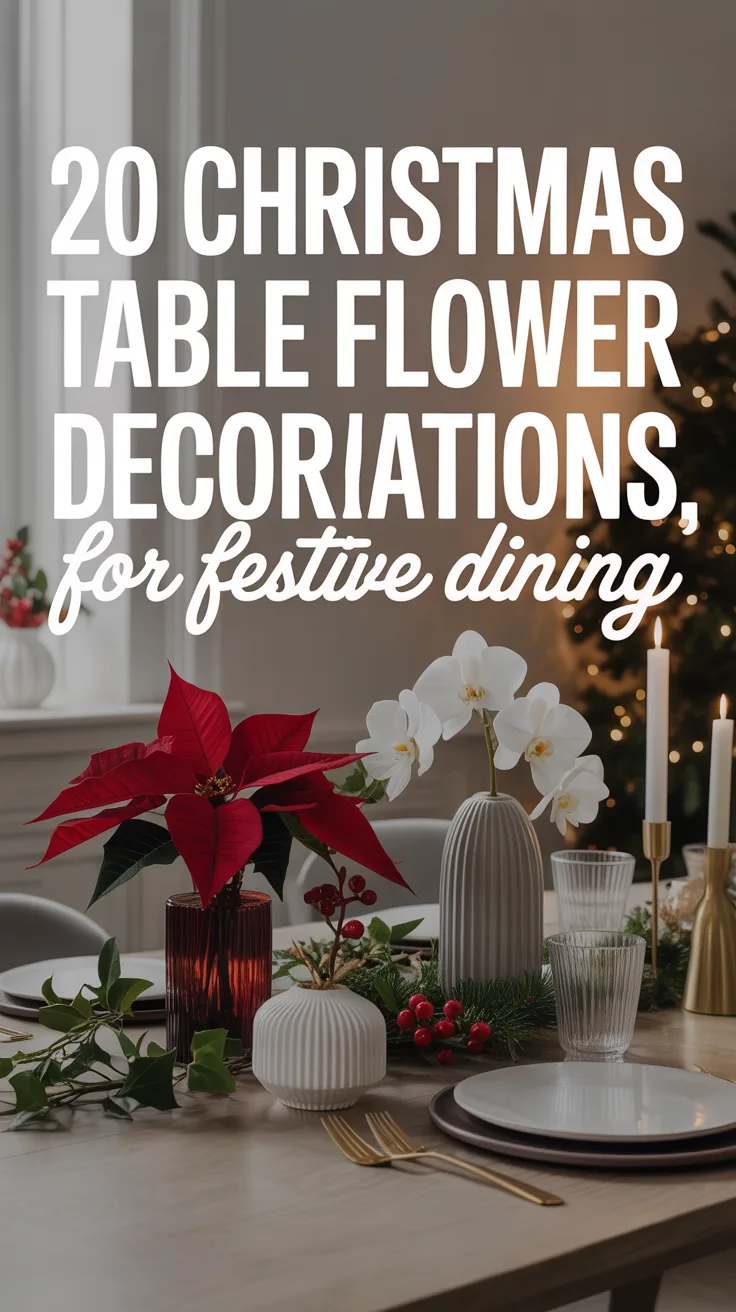
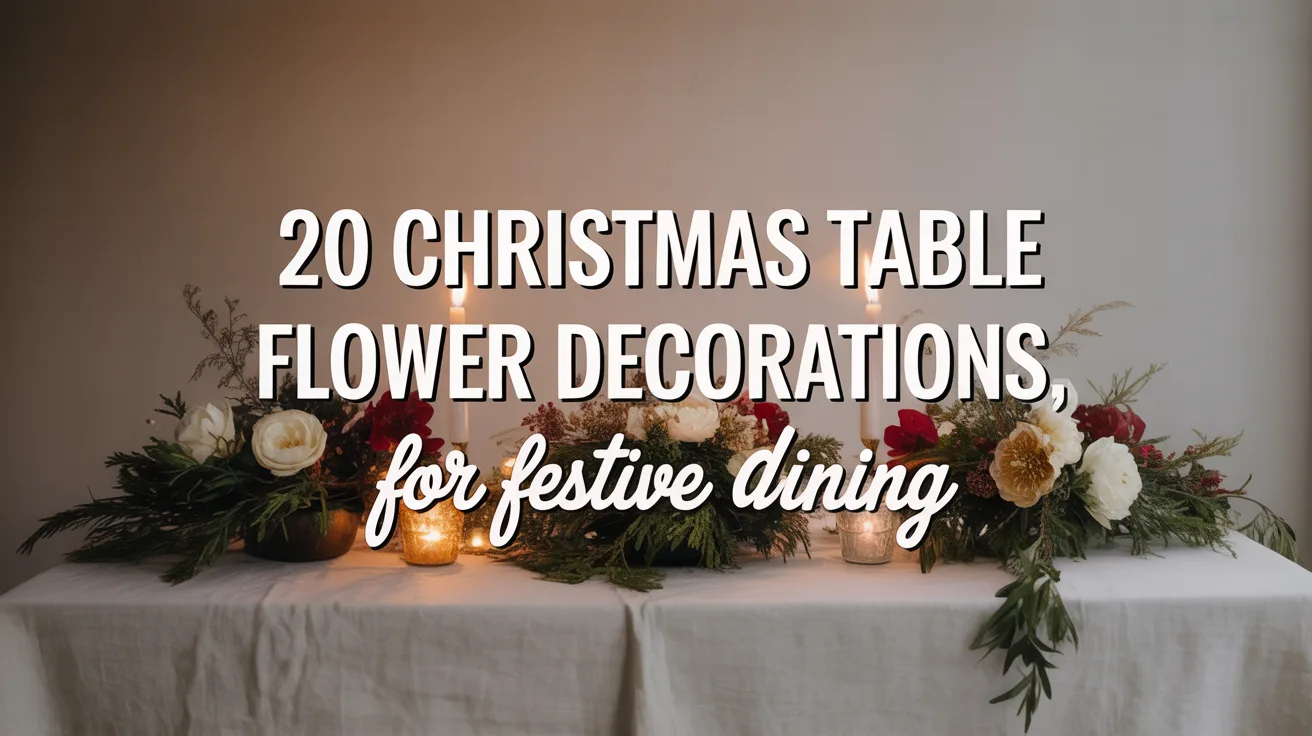
Introduction to Christmas Table Flower Decorations
There’s something magical about walking into a dining room adorned with stunning Christmas table flower decorations. I’ve always believed that the right floral centerpiece can transform an ordinary holiday meal into an unforgettable festive experience. Over the years, I’ve experimented with countless arrangements, from traditional poinsettias to modern minimalist designs, and I’m excited to share my favorite ideas with you.
When I first started hosting Christmas dinners, I made the mistake of overlooking table decorations until the last minute. Trust me, frantically trying to arrange flowers while simultaneously cooking a turkey is not the Christmas Eve memory you want! Now, I plan my Christmas table flower decorations well in advance, considering how they’ll complement the overall ambiance, menu, and even my dinnerware.
Whether you’re a seasoned host or preparing for your first holiday gathering, these floral decoration ideas will help you create a warm, inviting atmosphere that your guests will remember long after the last slice of Christmas pudding has been enjoyed.
Traditional Christmas Flower Arrangements
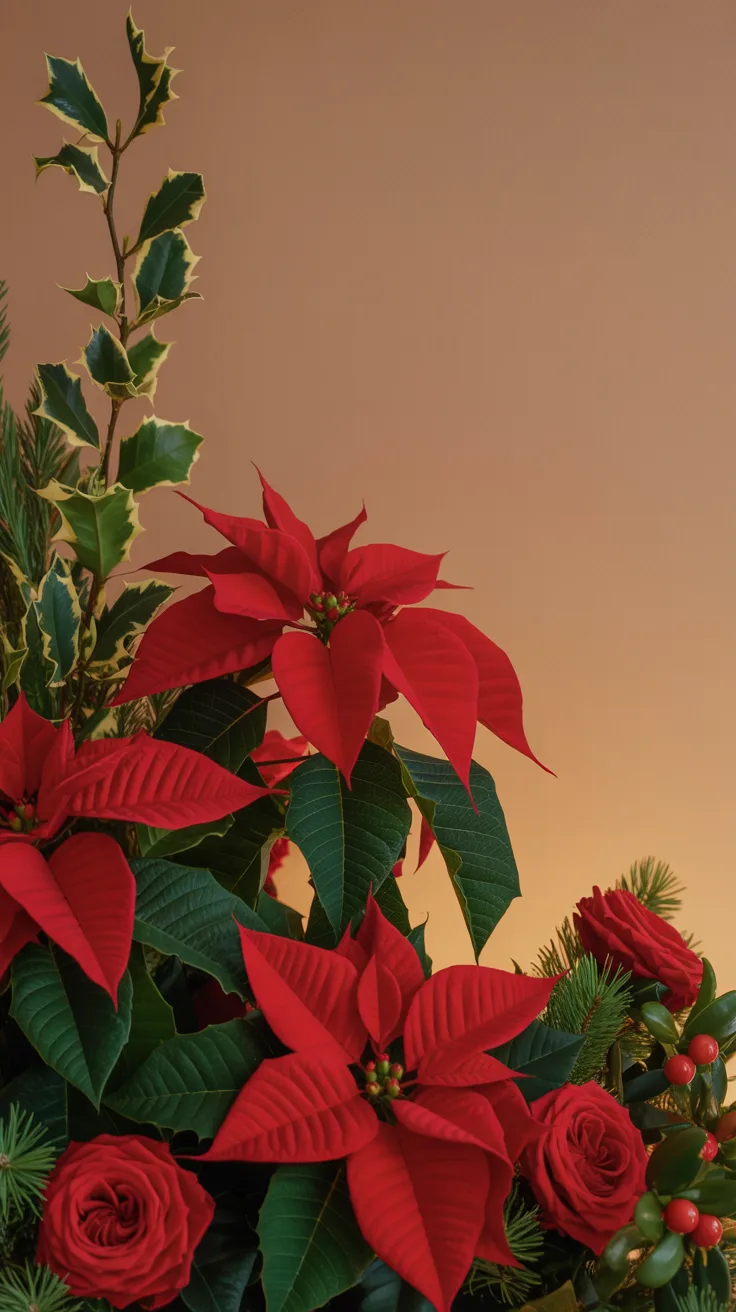
There’s something comforting about traditional Christmas table flower decorations that instantly evoke that warm, nostalgic holiday feeling. I remember my grandmother’s table always featured classic arrangements that seemed to capture the very essence of Christmas.
When creating traditional arrangements, I focus on incorporating these timeless elements:
- Poinsettias – These iconic red and green plants are Christmas classics for good reason. I once created mini poinsettia place settings by using small individual plants at each seat, which my guests loved and took home as keepsakes.
- Holly and Ivy – The glossy green leaves and bright red berries add texture and color. I learned the hard way to wear gloves when working with holly – those little spikes are sharper than they look!
- Red Roses – For elegant sophistication, nothing beats deep red roses mixed with pine branches and gold accents.
- Amaryllis – These dramatic blooms make stunning focal points. I once built an entire centerpiece around a single spectacular amaryllis bloom.
- Paperwhites and Narcissus – Their delicate white flowers and heavenly fragrance add a touch of refinement.
Pro Tip: When working with traditional arrangements, I’ve found that adding unexpected elements like cinnamon sticks, dried orange slices, or even small ornaments can give classic designs a personal touch while maintaining their traditional appeal.
Modern and Minimalist Designs
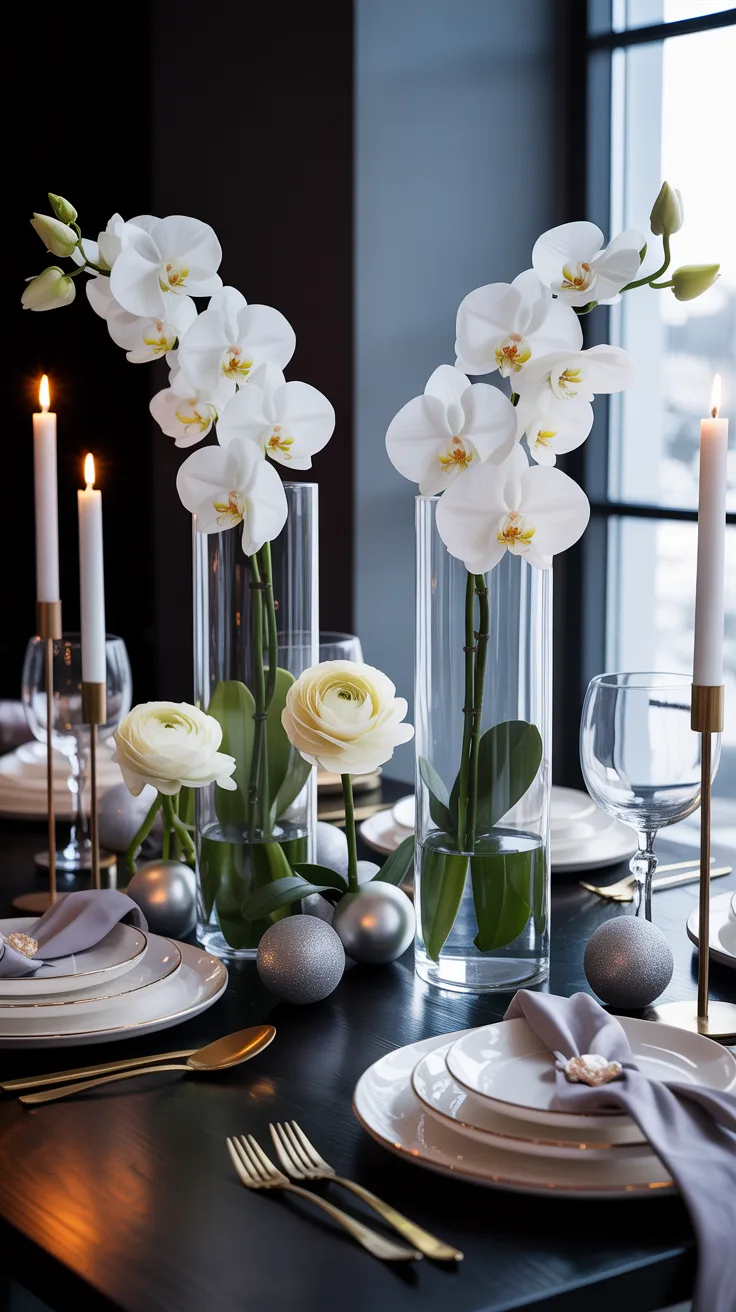
While I adore traditional Christmas decor, there’s something refreshingly elegant about modern, minimalist flower decorations for the holiday table. These contemporary designs often make a bigger impact with fewer elements—something I discovered after years of overcrowding my table with elaborate arrangements!
Here are my favorite modern approaches that have wowed my guests in recent years:
- White Orchids – Sleek, sophisticated, and surprisingly festive when paired with silver or gold accents. I place them in clear glass cylinders for a clean look.
- Monochromatic Arrangements – Using variations of a single color creates a powerful visual statement. My all-white arrangement with different textures (white roses, ranunculus, and snowberries) against dark tableware was a showstopper.
- Succulents and Air Plants – These trendy plants add an unexpected twist to holiday decor. I once created a “living table runner” with various succulents that lasted well beyond the holiday season.
- Floating Candles and Single Stems – Simple glass bowls with floating candles and individual flower heads create a magical, minimalist effect.
- Geometric Containers – Modern vessels in copper, brass, or matte black transform even simple greenery into contemporary art.
Pro Tip: For minimalist arrangements, focus on quality over quantity. I’ve learned that one perfect bloom in a striking container often makes a stronger statement than a cluttered arrangement. And don’t be afraid of negative space—it’s what gives modern designs their power.
DIY Christmas Table Centerpieces
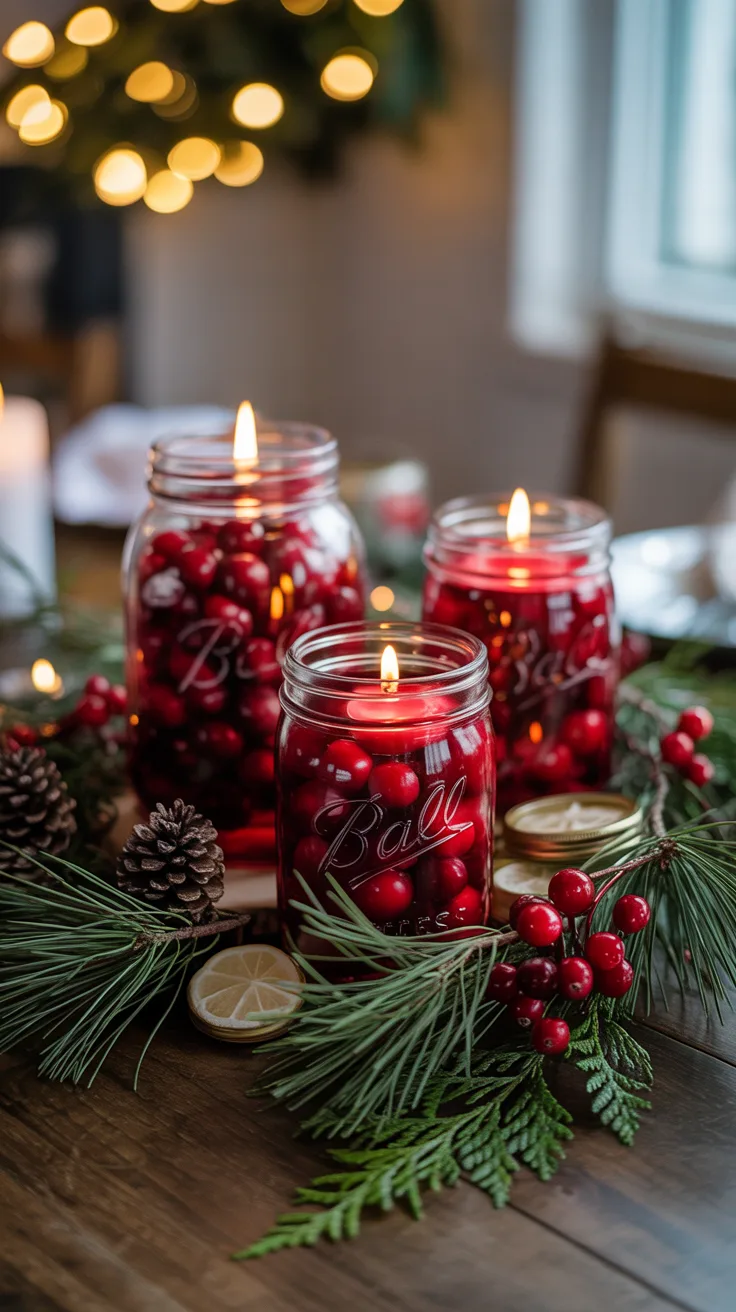
Some of my most memorable Christmas table flower decorations have been the ones I’ve created myself. There’s something deeply satisfying about guests admiring an arrangement and being able to say, “I made that!” Plus, DIY centerpieces allow you to perfectly match your decor while often saving money.
Here are some of my tried-and-true DIY ideas that even beginners can master:
- Mason Jar Magic – Fill mason jars with water, cranberries, and floating candles, then surround with pine branches and berries. I once created a row of these down my table, progressively varying the height, which created a beautiful undulating effect.
- Teacup Posies – Vintage teacups filled with small arrangements of roses, berries, and greenery make charming individual settings. My grandmother’s china teacups found new purpose this way, and sparked wonderful conversations about family history.
- Wooden Box Arrangements – A simple wooden box filled with floral foam becomes the perfect vessel for a lush arrangement. My rustic wooden centerpiece with red roses, pine, and candlesticks became so popular I now make a new version every year.
- Wine Bottle Vases – Empty wine bottles spray-painted gold or silver make elegant vases for single stems or branches. I learned this trick after a particularly festive Christmas Eve left me with several empty bottles!
- Fruit and Flower Combinations – Incorporating pomegranates, apples, or pears among your flowers creates a rich, abundant look reminiscent of Renaissance still-life paintings.
Pro Tip: When creating DIY centerpieces, I always do a “height test” by sitting at the table to ensure guests can see each other across the arrangement. One year I created a gorgeous tall centerpiece that forced my family to peek around it all night to have conversations!
Pro Tips for Choosing the Right Flowers
After years of both triumphs and disasters with holiday arrangements, I’ve gathered some wisdom about selecting the perfect flowers for Christmas tables. The right choices will stay fresh throughout your gathering and complement your overall holiday atmosphere.
When selecting flowers for your Christmas table, consider these factors that I’ve learned (sometimes the hard way):
Longevity matters – Choose hardier varieties that won’t wilt before dessert is served. Roses, carnations, chrysanthemums, and most greenery will last throughout your event and beyond. I once selected delicate flowers for a centerpiece only to find them drooping before the main course arrived!
Consider your home’s temperature – If your home gets warm with holiday cooking and guests, avoid delicate blooms that will quickly fade in the heat. I’ve found that tropical flowers like orchids and anthuriums actually hold up better in warm rooms than you might expect.
Think about fragrance – While scented flowers add ambiance, strong fragrances can compete with food aromas and even affect the taste perception of your carefully prepared meal. I learned this lesson when my heavily-scented lilies overwhelmed the subtle flavors of my Christmas dinner.
Coordinate with your overall palette – Your flowers should complement your table linens, dinnerware, and overall Christmas decor. I take a photo of my table settings before shopping for flowers to ensure everything will harmonize.
Pro Tip: Always buy flowers 2-3 days before your event to allow tight buds time to open. The exception is poinsettias, which should be purchased in full bloom. I once waited until Christmas Eve to buy flowers and had to settle for whatever was left—a stressful experience I don’t recommend!
Caring for Your Christmas Flower Arrangements
Creating beautiful Christmas table flower decorations is only half the battle—keeping them looking fresh throughout the holiday season is equally important. I’ve learned several tricks over the years that help extend the life of my arrangements, ensuring they look as good on Boxing Day as they did on Christmas Eve.
Start with proper preparation. When I bring flowers home, I immediately trim about an inch off the stems at a 45-degree angle under running water. This prevents air bubbles from forming in the stems that can block water absorption. I also remove any foliage that would sit below the waterline to prevent bacterial growth.
Water management is crucial. I change the water every other day, using room temperature water rather than cold. For arrangements in floral foam, I check daily to ensure the foam hasn’t dried out. One Christmas, I forgot to check my centerpiece’s moisture level, and by dinner time, the flowers were visibly stressed.
Location matters more than you might think. I keep arrangements away from direct sunlight, heating vents, and fruit bowls (ripening fruit releases ethylene gas that speeds flower deterioration). I discovered this connection after noticing arrangements placed near my fruit display consistently died faster than others.
For longer-lasting arrangements, I add a preservative to the water. Commercial flower food works well, but in a pinch, I’ve used a homemade version: 1 teaspoon sugar, 1 teaspoon household bleach, and 2 teaspoons lemon juice per quart of water. This mixture provides nutrients while inhibiting bacterial growth.
Pro Tip: If you notice certain flowers starting to fade before others in an arrangement, don’t hesitate to remove and replace just those blooms. I keep a few extra stems in water in the refrigerator specifically for this purpose, which has saved many arrangements from early retirement!
Conclusion: Bringing It All Together
Creating memorable Christmas table flower decorations isn’t about following rigid rules or spending a fortune—it’s about expressing your personal style and creating an atmosphere where cherished memories can bloom. Whether you prefer the timeless elegance of traditional arrangements, the clean lines of modern designs, or the heartfelt charm of DIY creations, the perfect centerpiece is the one that makes you and your loved ones smile.
I’ve shared my successes, failures, and lessons learned throughout this guide, hoping to inspire you to experiment with confidence. Remember that even professional florists have arrangements that don’t turn out as planned—it’s all part of the creative process.
As you prepare your table this holiday season, I encourage you to embrace imperfection and enjoy the process. Some of my most memorable Christmas tables featured last-minute adjustments or happy accidents that ended up becoming new traditions. Your guests will remember the warmth and love that went into your gathering far more than whether every bloom was perfectly placed.
So gather your greenery, select your stems, and let your creativity flow. Your Christmas table—and the precious moments shared around it—will be all the more special for your thoughtful floral touches.
Frequently Asked Questions
What are the best flowers for a Christmas table centerpiece?
The most reliable choices include roses, carnations, amaryllis, and poinsettias, complemented with evergreen foliage, holly, and berries. These options offer festive colors and good longevity. For something unexpected, consider white orchids, hypericum berries, or even succulents for a modern twist.
How can I make my Christmas flower arrangements last longer?
Change the water every two days, trim stems at an angle before placing in water, keep arrangements away from heat sources and direct sunlight, and use flower preservative in the water. For arrangements in floral foam, check daily to ensure the foam remains moist.
Can I use artificial flowers for Christmas decorations?
Absolutely! Today’s high-quality silk and artificial flowers can look remarkably realistic. They’re especially practical for arrangements you want to set up well in advance or reuse year after year. I often mix artificial elements like berries or pine branches with fresh flowers for the best of both worlds.
What colors are best for Christmas flower decorations?
Traditional Christmas colors like red, green, gold, and white always work beautifully. For contemporary settings, consider all-white arrangements with silver accents, or rich jewel tones like burgundy, purple, and deep blue. Your color scheme should complement your existing decor and table settings.
How do I choose a theme for my Christmas table decorations?
Look to your home’s existing style, your Christmas decor, and personal preferences for inspiration. Consider themes like “winter wonderland” with whites and silvers, “traditional Christmas” with reds and greens, “rustic holiday” with natural elements, or “elegant celebration” with gold and crystal accents. The most successful themes reflect your personal style while creating a cohesive look.