Introduction to DIY Valentine Flower Arrangements
There’s something magical about handing someone a bouquet you’ve created with your own hands. I still remember the first time I attempted a DIY Valentine flower arrangement for my partner—it was slightly lopsided, the roses were cut at awkward angles, and I’d somehow managed to get floral foam crumbs everywhere. But you know what? It was received with more joy than any expensive store-bought arrangement I’d ever given.
Creating your own Valentine flower arrangements isn’t just about saving money (though that’s definitely a perk). It’s about putting thought, care, and a piece of yourself into a gift that speaks louder than words. Whether you’re a complete beginner or someone who’s dabbled in floral design before, I’m here to walk you through 20 stunning arrangements that anyone can make. Trust me—if I can do it, so can you.
Essential Materials for Flower Arrangements
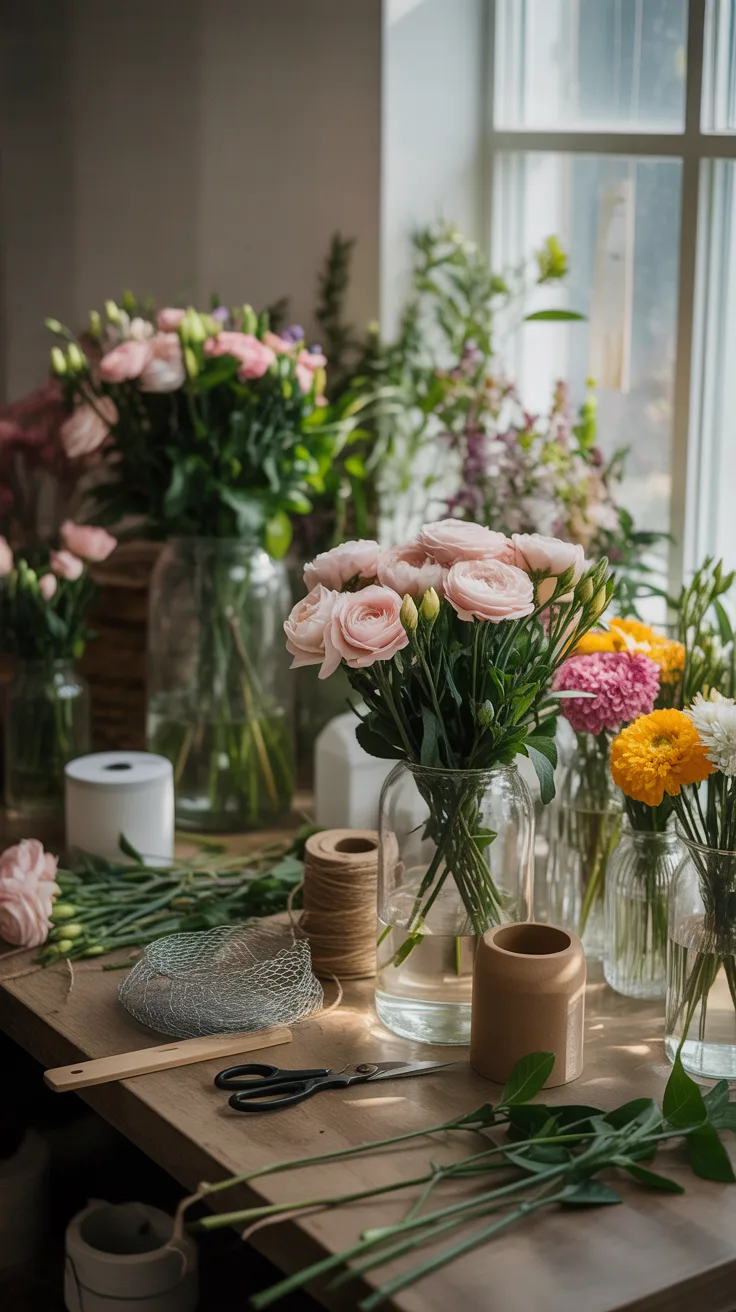
Before we dive into the creative process, let’s talk about gathering your supplies. I’ve learned the hard way that having everything ready before you start makes the entire experience so much smoother. Here’s what you’ll need in your DIY toolkit:
- Fresh flowers of your choice (aim for a mix of focal flowers, filler flowers, and greenery)
- Sharp scissors or professional floral shears (dull blades crush stems—rookie mistake I made too many times)
- Floral foam, chicken wire, or a narrow-necked vase for structure
- Clean containers—vases, mason jars, teacups, or even repurposed bottles
- Floral tape and wire for securing stems
- Decorative elements like ribbons, twine, or decorative stones
- Fresh water and commercial flower food packets
- A clean workspace with newspaper or a drop cloth
Pro Tip: Visit your local farmer’s market or grocery store early in the morning for the freshest blooms at the best prices. I’ve found that Wednesday or Thursday shopping gives you the best selection before the Valentine’s rush hits.
Step-by-Step Guide to Creating Beautiful Arrangements
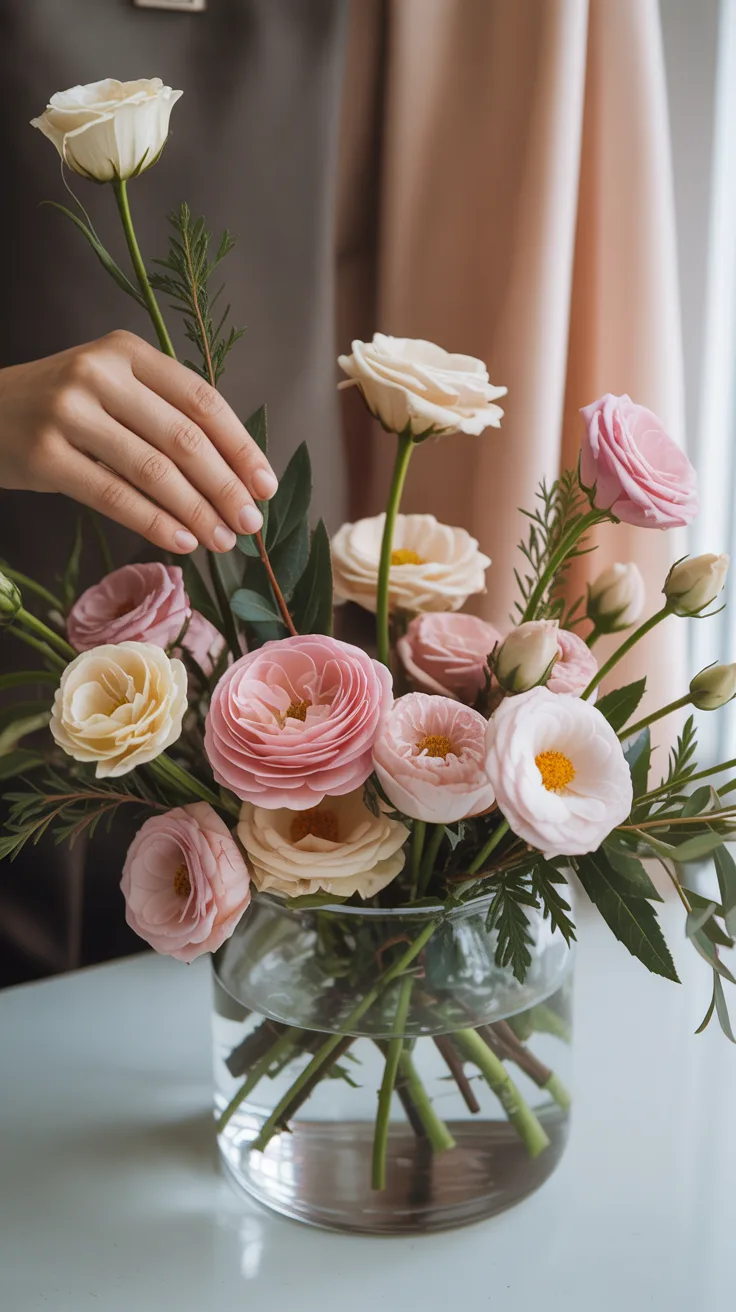
Now for the fun part! Creating a beautiful DIY Valentine flower arrangement follows a basic formula that, once you understand it, opens up endless possibilities. Here’s my tried-and-true process:
- Choose your color palette: Stick to 2-3 complementary colors for a cohesive look. Classic Valentine palettes include red and white, pink and burgundy, or soft pastels.
- Prepare your container: Clean it thoroughly and add soaked floral foam or fill with fresh water.
- Process your flowers: Remove any leaves that would sit below the waterline and cut stems at a 45-degree angle.
- Create your foundation: Start with greenery to establish the shape and size of your arrangement.
- Add focal flowers: Place your largest, most eye-catching blooms first, spacing them evenly.
- Fill in gaps: Use secondary flowers and filler blooms to create fullness and texture.
- Final touches: Step back, rotate your arrangement, and adjust until it looks balanced from every angle.
Classic Red Rose Arrangement
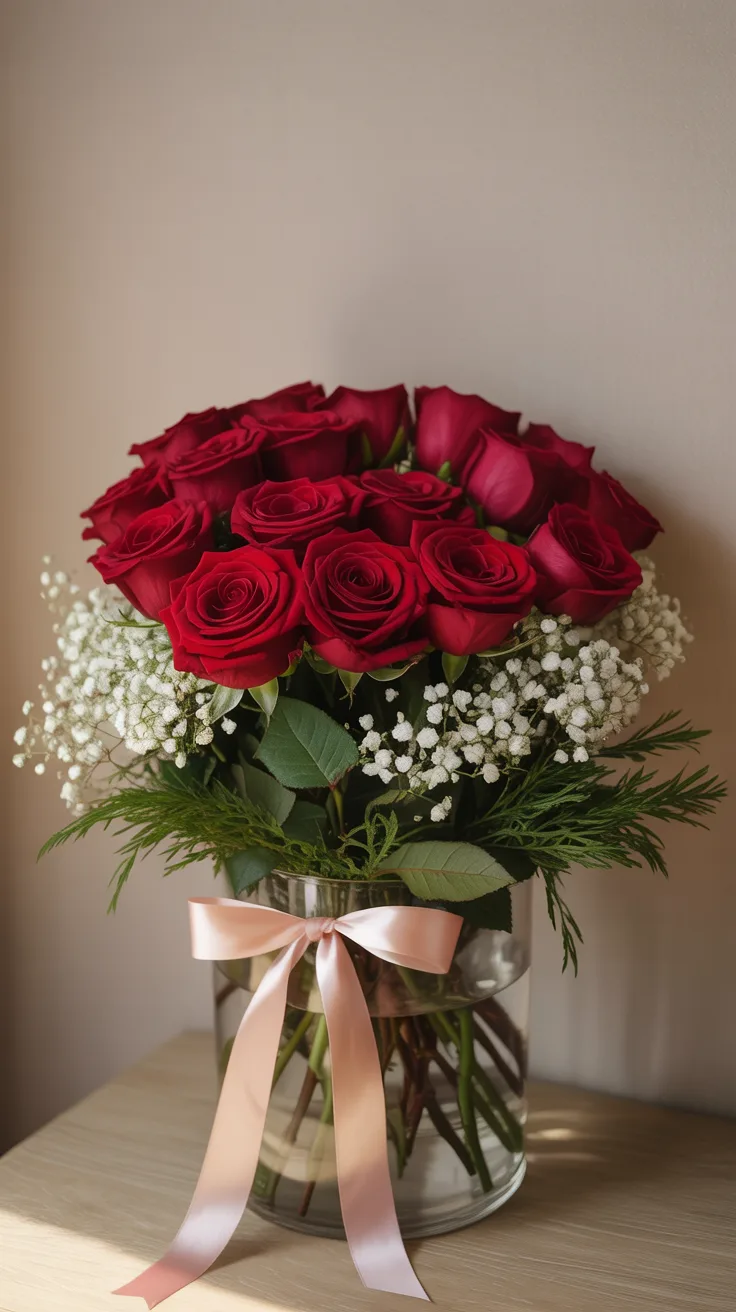
Let’s start with the quintessential Valentine arrangement—the classic red rose display. I’ll never forget accidentally pricking myself about a dozen times during my first attempt because I forgot to remove the thorns. Learn from my mistakes!
For this timeless arrangement, gather 12-24 red roses, baby’s breath or white wax flowers, and lush greenery like Italian ruscus or eucalyptus. Begin by creating a base of greenery in your vase, then add roses in a spiral pattern, turning the vase as you work. The key is varying the heights slightly—some roses should sit higher than others to create dimension. Tuck baby’s breath between the roses for that romantic, dreamy effect. Finish with a satin ribbon around the vase for an elegant touch.
Modern Minimalist Arrangement
If your Valentine appreciates clean lines and contemporary aesthetics, this arrangement is perfect. I personally love this style because it’s actually easier to execute and makes a bold statement with less effort.
Select 3-5 statement blooms—think calla lilies, anthuriums, or single-variety roses in an unexpected color like dusty mauve or burnt orange. Choose a sleek, geometric vase in white, black, or clear glass. The magic here is in the negative space. Arrange your flowers at varying heights, allowing each stem room to breathe. Add a single type of greenery, like monstera leaves or bear grass, for architectural interest. Less truly is more with this style.
Rustic Wildflower Arrangement
This is my personal favorite because it feels effortless and romantic in an unpretentious way. The rustic wildflower arrangement looks like you just wandered through a meadow and gathered whatever caught your eye—even though there’s actually thought behind it.
Combine flowers like ranunculus, chamomile, lavender, spray roses, and Queen Anne’s lace. Add textural elements like dried wheat, thistle, or seeded eucalyptus. The container matters here—mason jars, vintage pitchers, wooden boxes, or even wrapped tin cans work beautifully. Arrange loosely and asymmetrically, letting some stems cascade over the edges. The imperfection is what makes it perfect.
Pro Tip: For the most natural-looking wildflower arrangement, hold all your flowers in your hand first, adjusting until you like the composition, then place the entire bunch into your container at once.
More DIY Valentine Flower Arrangement Ideas
Beyond these three signature styles, here are additional DIY Valentine flower arrangements to inspire your creativity:
- Ombré Rose Gradient: Arrange roses from deep red to blush pink to white for a stunning color transition
- Succulent and Flower Combo: Mix small succulents with soft flowers for a long-lasting arrangement
- Floating Flower Bowl: Float gardenia or camellia blooms in a shallow bowl with floating candles
- Teacup Arrangements: Create petite arrangements in vintage teacups for a charming gift
- Monochromatic Magic: Use various flowers all in one color family for sophisticated impact
- Heart-Shaped Arrangement: Use floral foam cut into a heart shape as your base
- Herb and Flower Mix: Combine fragrant herbs like rosemary and lavender with roses
- Tropical Paradise: Feature birds of paradise, orchids, and tropical foliage
Tips for Keeping Flower Arrangements Fresh
Nothing’s more disappointing than watching your beautiful creation wilt after just a couple of days. I’ve experimented with countless methods over the years, and here’s what actually works:
- Change the water every 1-2 days, or whenever it starts looking cloudy
- Re-cut stems by half an inch every few days to maintain water absorption
- Keep arrangements in a cool location, away from direct sunlight, heating vents, and fruit bowls (fruit releases ethylene gas that ages flowers faster)
- Use the flower food packets—they really do make a difference
- Remove any dying blooms immediately to prevent bacteria spread
- Mist delicate flowers like hydrangeas daily
- Consider adding a few drops of vodka or a penny to the water (sounds crazy, but it works!)
Pro Tip: If your roses start drooping prematurely, try the “hot water trick.” Submerge the stems in hot (not boiling) water for 30 seconds, then immediately place them in cool water. This can revive wilting blooms like magic.
Conclusion: Share the Love with DIY Arrangements
Creating DIY Valentine flower arrangements has become one of my favorite traditions. There’s something deeply satisfying about selecting each bloom, arranging them thoughtfully, and presenting something made entirely by your own hands. The slight imperfections, the personal touches, the effort involved—these are what transform flowers from a nice gesture into a meaningful expression of love.
Don’t worry if your first attempt isn’t magazine-perfect. Mine certainly wasn’t, and honestly, some of my “failures” have been the most beloved gifts I’ve ever given. The beauty of DIY is in the doing, the learning, and the love you pour into every stem. So gather your materials, put on some good music, and let your creativity bloom this Valentine’s Day.
Frequently Asked Questions
What flowers are best for Valentine arrangements?
Roses remain the classic choice, but don’t overlook tulips, ranunculus, peonies (if available), carnations, and lilies. I personally love mixing traditional romantic flowers with unexpected elements like anemones or lisianthus for added interest and texture.
How long do homemade flower arrangements last?
With proper care, most arrangements last 5-10 days. Hardier flowers like carnations and chrysanthemums can last up to two weeks, while delicate blooms like tulips may only last 5-7 days. Changing water regularly is the single most important factor in longevity.
Can I use artificial flowers for these arrangements?
Absolutely! High-quality silk or preserved flowers have come a long way and can create stunning, permanent arrangements. They’re perfect for those with allergies or anyone wanting a lasting keepsake. I recommend mixing real greenery with artificial blooms for the most realistic look.
What are some budget-friendly flower options?
Carnations, alstroemeria, chrysanthemums, and baby’s breath offer excellent value. Grocery store flowers are often surprisingly fresh and affordable. You can also supplement with greenery from your own garden or foraged branches to stretch your floral budget further.
How can I make my arrangement more unique?
Personal touches make all the difference! Consider adding meaningful elements like a handwritten note tucked among the stems, their favorite candy, a small piece of jewelry, or using a container with sentimental value. You could also incorporate non-floral elements like feathers, berries, or seasonal branches.