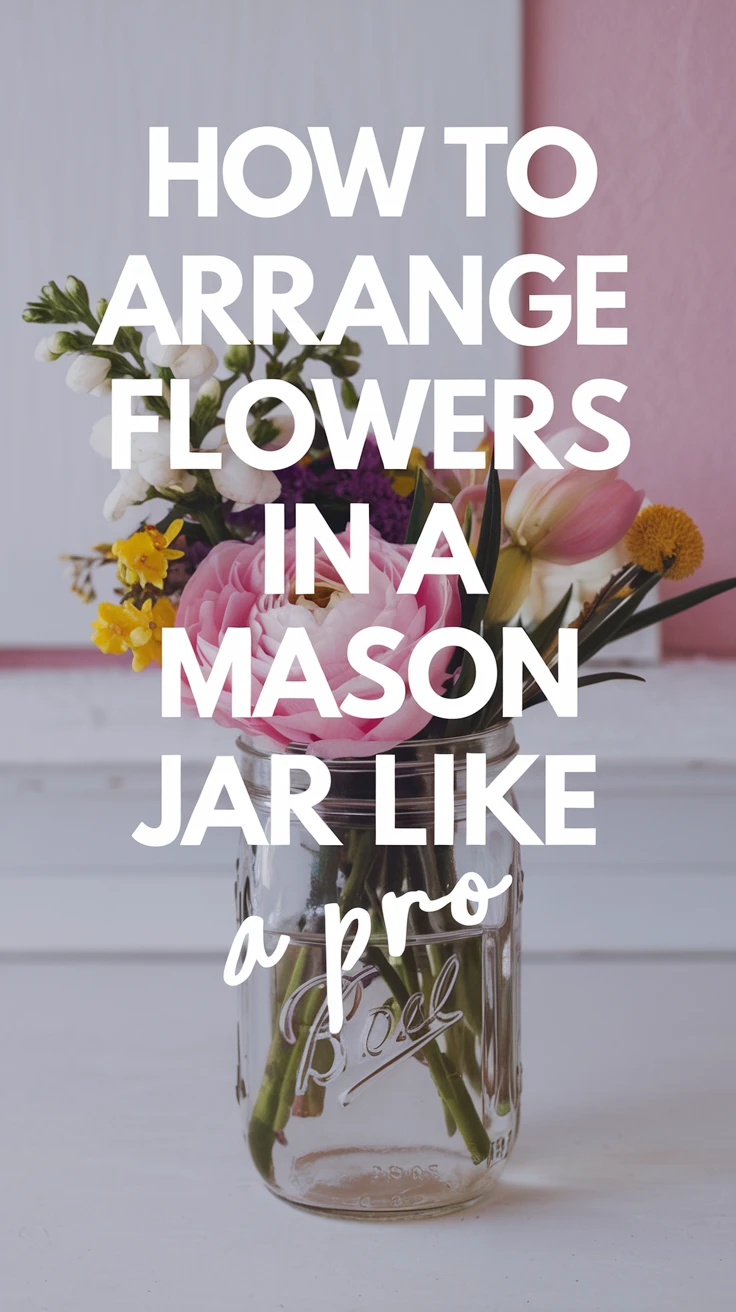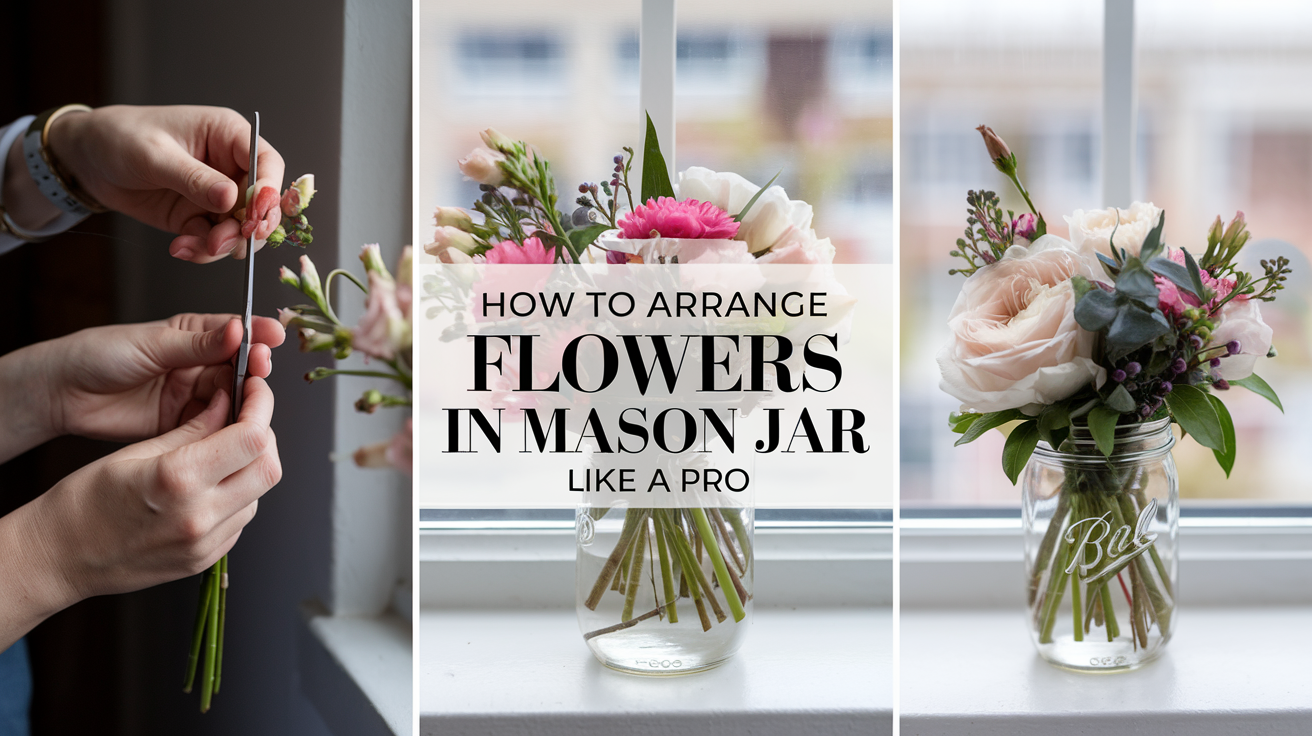
There’s something timeless about flowers arranged in a mason jar. The combination of simple glass and fresh blooms works beautifully for everyday home decor, casual entertaining, seasonal centerpieces, bridal showers, and rustic weddings. The secret to making a mason jar arrangement look polished rather than thrown together is choosing the right jar, preparing the stems correctly, and building the arrangement in layers. Whether you’re working with grocery-store flowers, garden blooms, or wildflowers, this updated guide will help you create a balanced arrangement that looks naturally beautiful.
Try This at Home: A Simple Garden-Style Mason Jar Bouquet
If you want to practice before tackling a larger arrangement, start with this easy project using one mason jar and a small bunch of flowers. The goal is a loose, garden-inspired bouquet that looks relaxed rather than perfectly symmetrical, making it especially beginner-friendly.
What You’ll Need
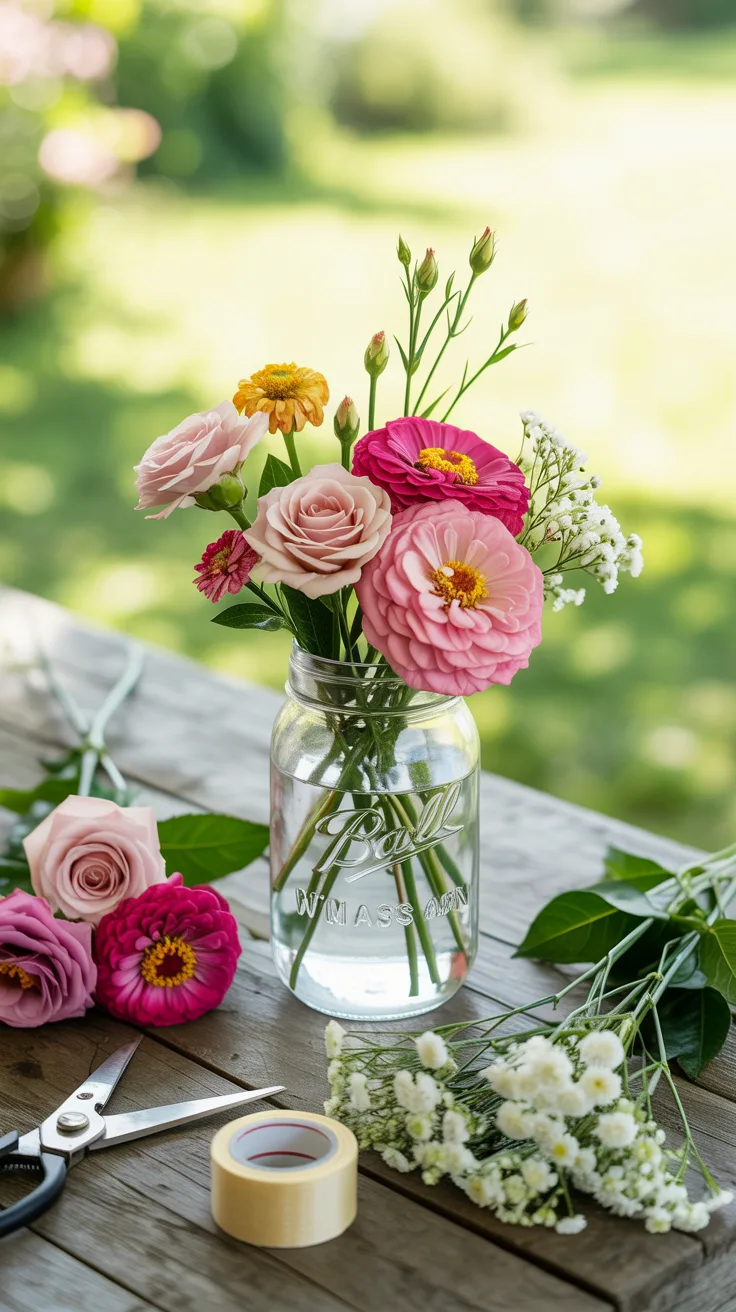
- 1 clean 16 oz wide-mouth mason jar
- 3 medium focal flowers, such as roses or zinnias
- 3–5 smaller flowers, such as daisies or carnations
- 2–3 stems of greenery or leafy filler
- A few sprigs of baby’s breath or another delicate filler
- Floral shears or sharp scissors
- Floral tape
- Fresh water

View on AmazonAs an Amazon Associate, I earn from qualifying purchases.

View on AmazonAs an Amazon Associate, I earn from qualifying purchases.
You can pick up the basics with simple mason jar flower-arranging supplies.
How to Make It
- Prepare the jar. Wash and rinse the mason jar, add fresh water, and dry the rim so the floral tape will stick.
- Make a simple grid. Place a few narrow strips of floral tape across the opening to create small sections that will help support the stems.
- Start with greenery. Add two or three leafy stems at slightly different angles to establish the basic shape of the arrangement.
- Add three focal flowers. Place one slightly taller flower near the center and position the other two a little lower rather than lining all three up at the same height.
- Fill the open spaces. Add your smaller flowers between the focal blooms while turning the jar so the arrangement looks balanced from several angles.
- Finish loosely. Tuck in a few delicate filler flowers and stop before every empty space disappears.
What You’re Aiming For
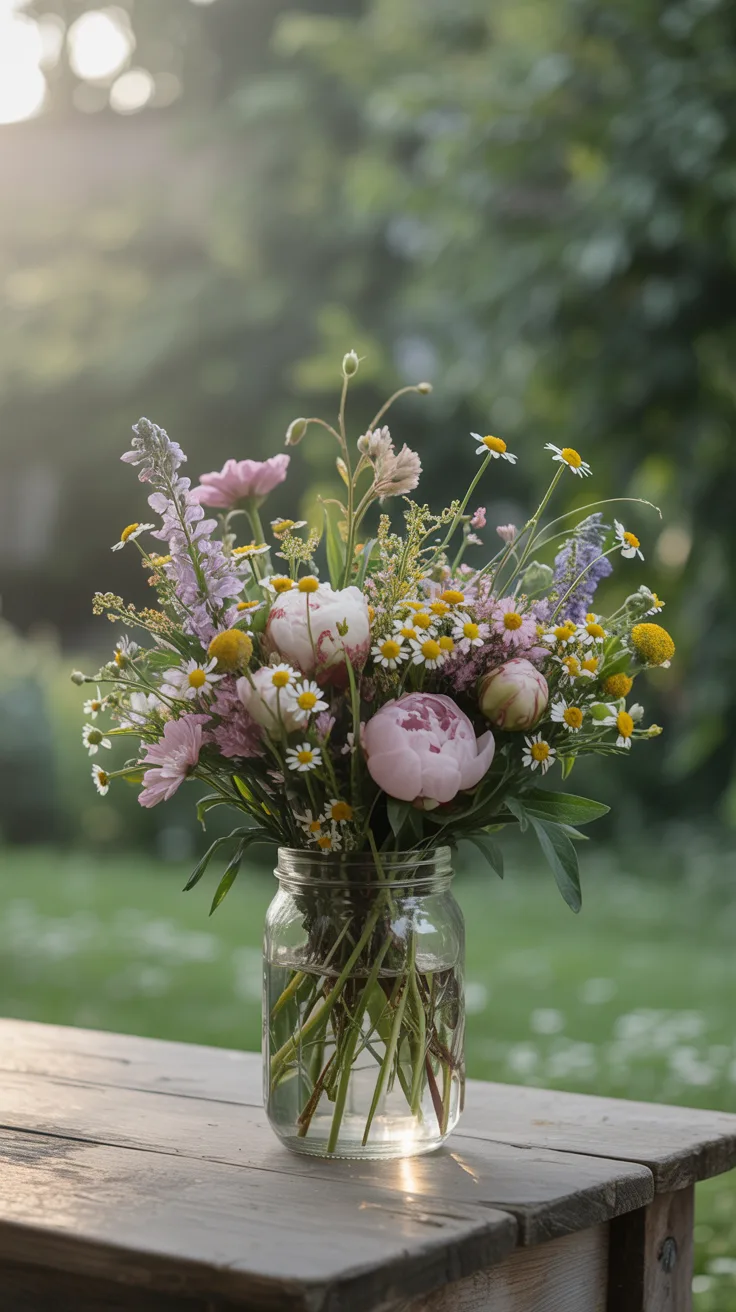
Your finished arrangement should have a softly rounded shape with a little variation in height and enough open space for individual flowers to stand out. Don’t worry if a stem leans or one flower sits slightly higher than another because those small differences help create the casual garden-picked look.

View on AmazonAs an Amazon Associate, I earn from qualifying purchases.

View on AmazonAs an Amazon Associate, I earn from qualifying purchases.
Selecting the Right Mason Jar
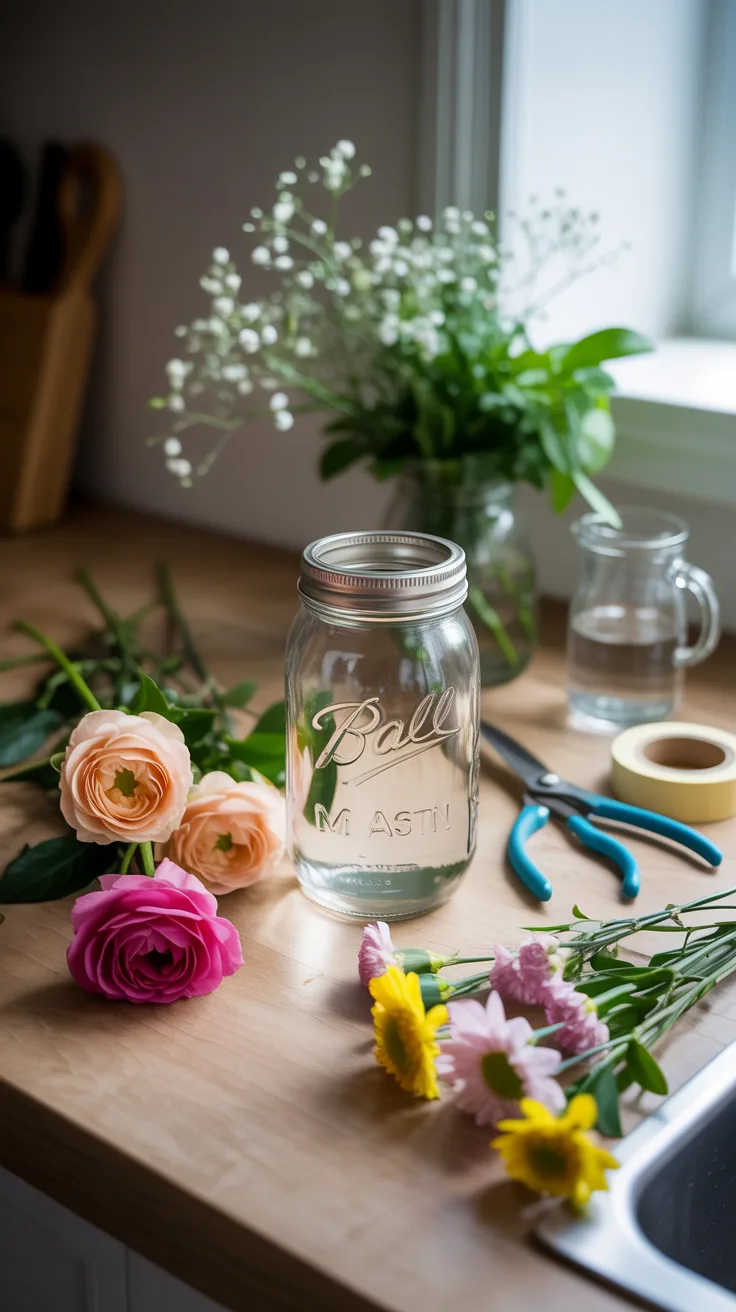
The size and shape of your mason jar have a surprisingly big effect on the finished arrangement. A jar that is too large can swallow a small bouquet, while a narrow jar can make a fuller arrangement difficult to build.
Choosing the Best Size
| Jar Size | Best Used For | Approximate Flower Count |
|---|---|---|
| 8 oz | Bud vases and small arrangements | 3–5 stems |
| 16 oz | Tabletop and medium arrangements | 7–10 stems |
| 32 oz | Full centerpieces and larger arrangements | 12–15 stems |

View on AmazonAs an Amazon Associate, I earn from qualifying purchases.
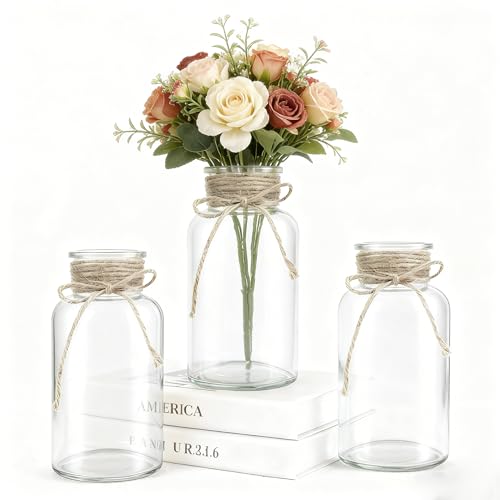
View on AmazonAs an Amazon Associate, I earn from qualifying purchases.
You can browse wide-mouth mason jars for flower arrangements.
Jar Features to Consider
- Wide-mouth jars: Give you more room to position stems and work especially well for fuller bouquets.
- Clear glass: Creates a clean, classic look that works with almost any flower combination.
- Vintage-style blue glass: Adds color and character before you add a single flower.
- Textured glass: Can make a simple arrangement feel more decorative.
- Different heights: Work well when grouping several mason jar arrangements together.
Essential Tools and Materials
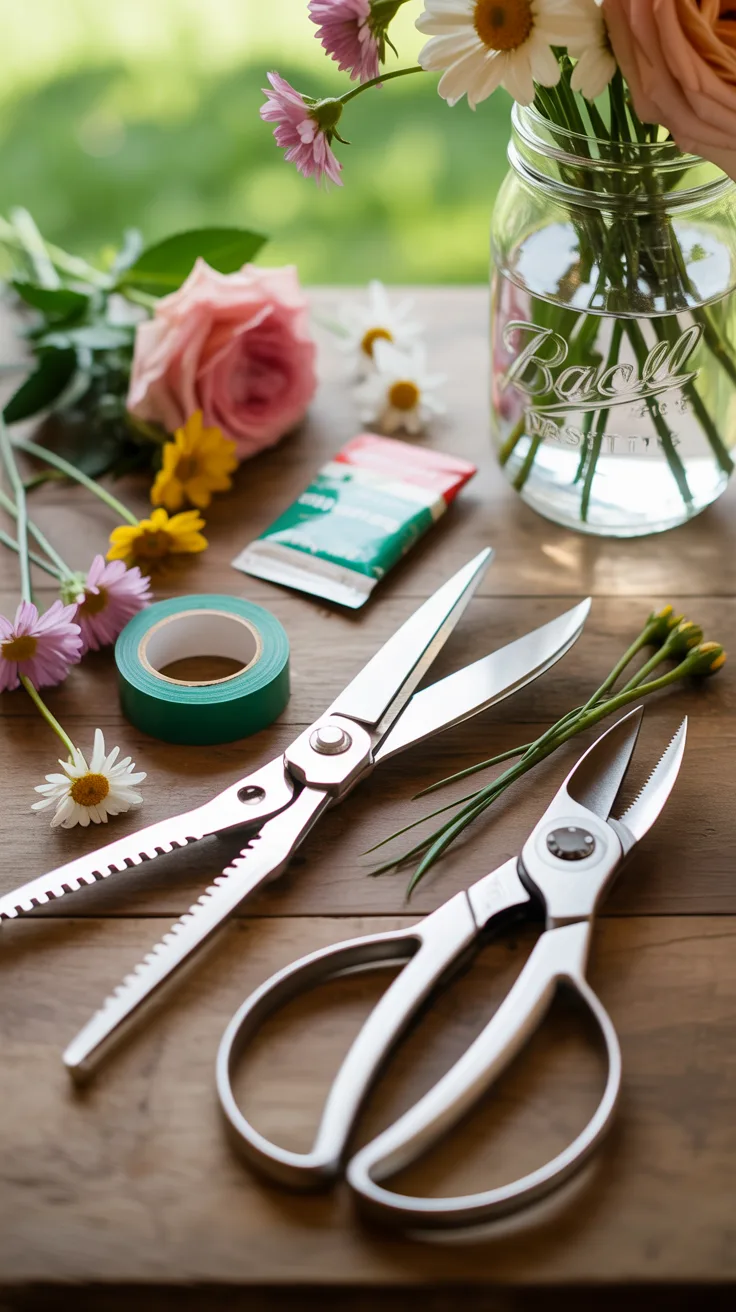
You don’t need professional florist equipment to make a beautiful mason jar arrangement, but a few basic tools make the process much easier and help protect delicate stems.
| Tool | Purpose | Importance |
|---|---|---|
| Floral shears or sharp scissors | Making clean stem cuts | Essential |
| Floral tape | Creating a support grid | Very helpful |
| Flower food | Helping cut flowers stay fresh | Recommended |
| Wire cutters | Trimming woody or artificial stems | Optional |
Additional Supplies
- Clean room-temperature water
- Paper towels or a clean cloth
- Jar-cleaning brush
- Measuring cup
- Work gloves if you are handling thorny stems
Flower Selection and Preparation
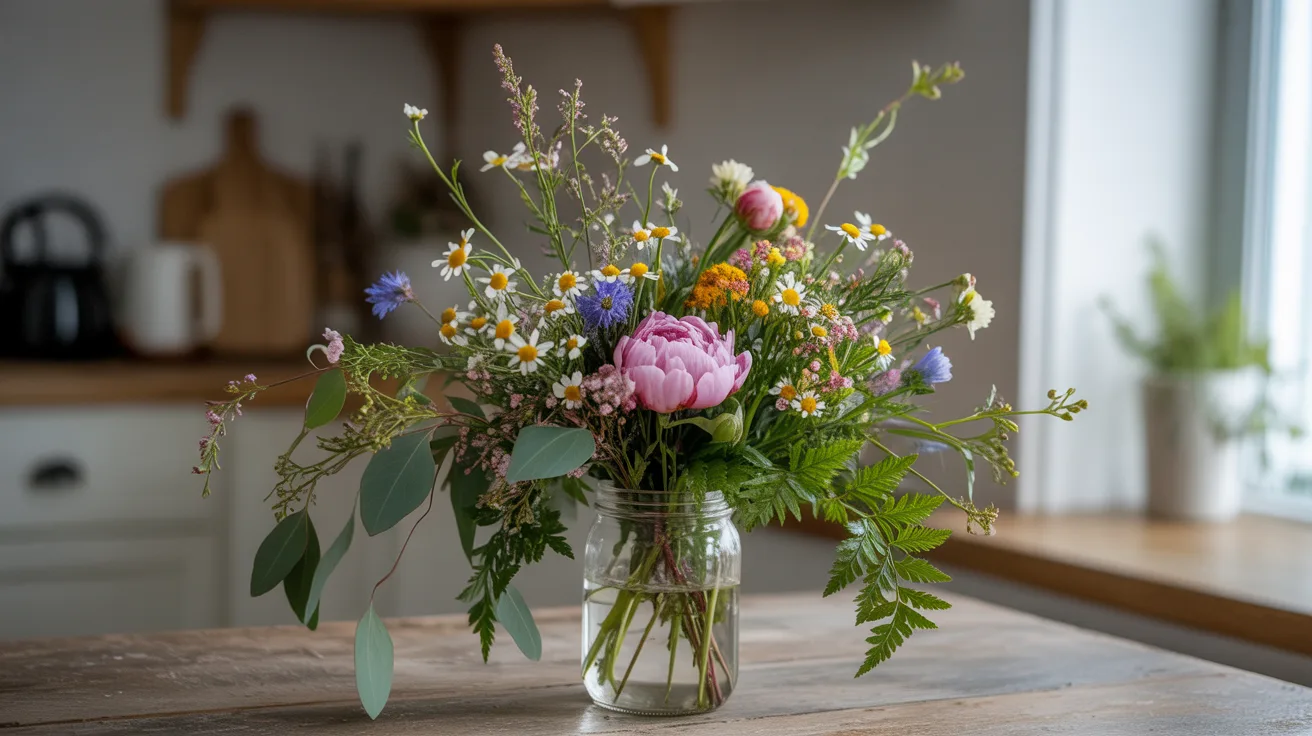
Mason jars look especially good with flowers that have a relaxed garden-inspired shape. You can keep the arrangement simple with one flower variety or combine focal flowers, smaller supporting blooms, and greenery for a fuller design.
Best Flowers for Mason Jar Arrangements
- Daisies
- Black-eyed Susans
- Garden roses
- Zinnias
- Sunflowers
- Baby’s breath
- Cosmos
- Lavender
- Carnations
- Chrysanthemums
- Seasonal greenery
How to Prepare Fresh Flowers
- Wash the mason jar thoroughly so you are starting with a clean container.
- Remove leaves and foliage that would otherwise sit below the water line.
- Use clean, sharp floral shears to trim the bottom of each stem.
- Sort the flowers by height, size, and type before you begin arranging.
- Place freshly cut stems in clean water while you prepare the rest of the bouquet.

View on AmazonAs an Amazon Associate, I earn from qualifying purchases.
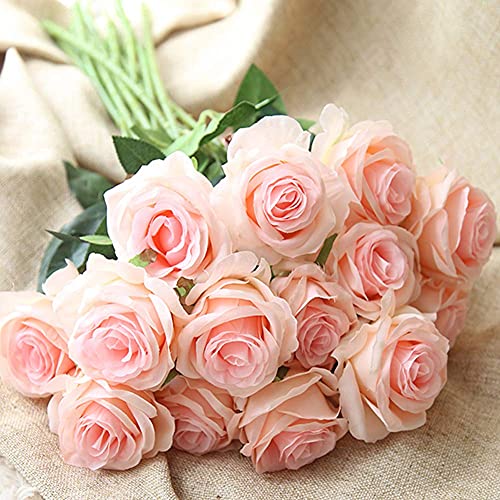
View on AmazonAs an Amazon Associate, I earn from qualifying purchases.
Removing submerged foliage is particularly important because decaying leaves can encourage bacterial growth and make the water cloudy much faster.
How to Arrange Flowers in a Mason Jar
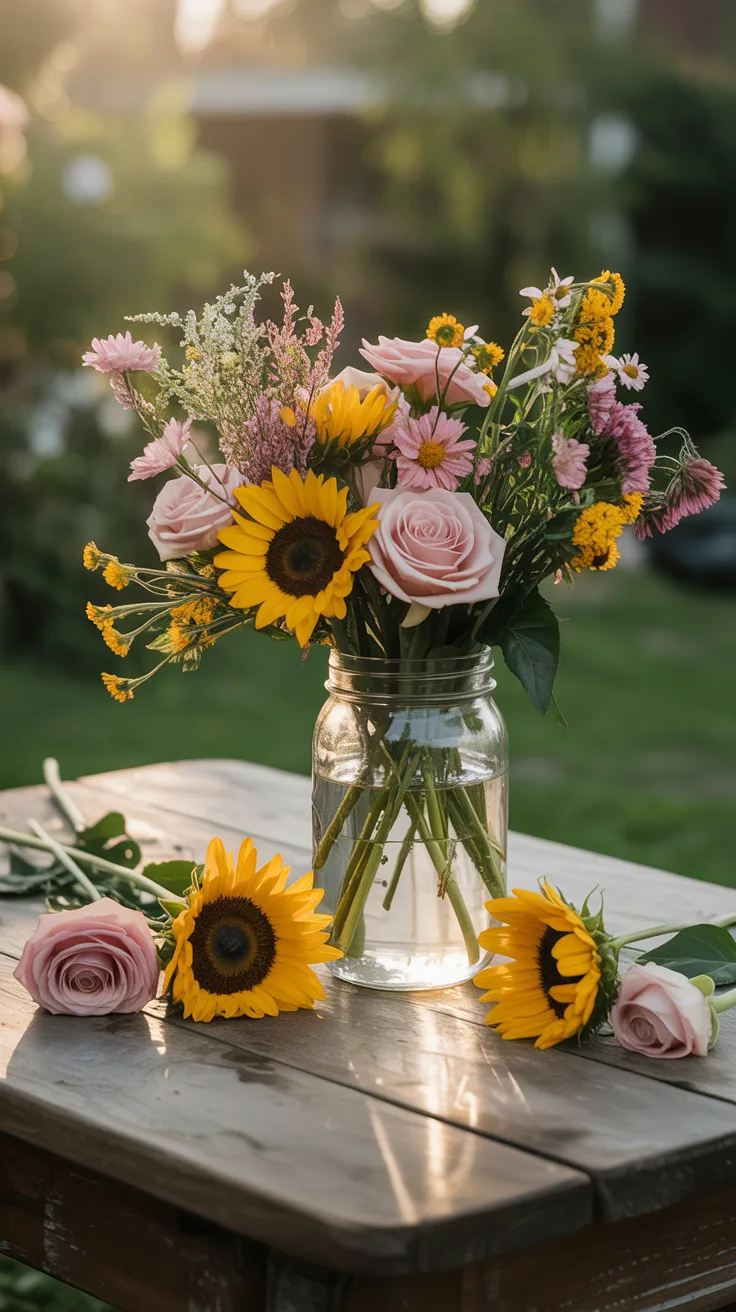
Instead of trying to create the perfect bouquet in your hand and dropping it into the jar, build the arrangement gradually. Working directly in the jar gives you more control over height, spacing, and the direction of individual flowers.
1. Create a Floral Tape Grid
Dry the rim of the mason jar and place narrow strips of floral tape across the opening in a simple grid. The openings give individual stems support and help prevent heavier flowers from falling toward the outside of the jar.
2. Establish the Framework
Begin with greenery or several structural stems to establish the overall width and height of the arrangement. Avoid making every stem exactly the same height because subtle variation creates a more natural appearance.
3. Add the Focal Flowers
Place your largest or most eye-catching flowers next. Rather than creating a perfectly symmetrical pattern, turn the jar as you work and distribute the focal blooms at slightly different heights.
4. Add Supporting Flowers
Fill the spaces between the focal flowers with medium-sized blooms. Look at the arrangement from several angles as you work so one side does not become noticeably heavier than the other.
5. Fill the Remaining Gaps
Finish with smaller flowers, delicate filler blooms, or greenery. A little open space between flowers is often more attractive than packing every available opening with another stem.

View on AmazonAs an Amazon Associate, I earn from qualifying purchases.
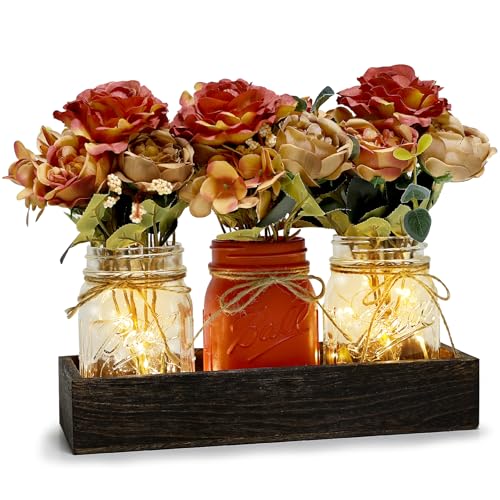
View on AmazonAs an Amazon Associate, I earn from qualifying purchases.
How to Make a Mason Jar Arrangement Look Professional
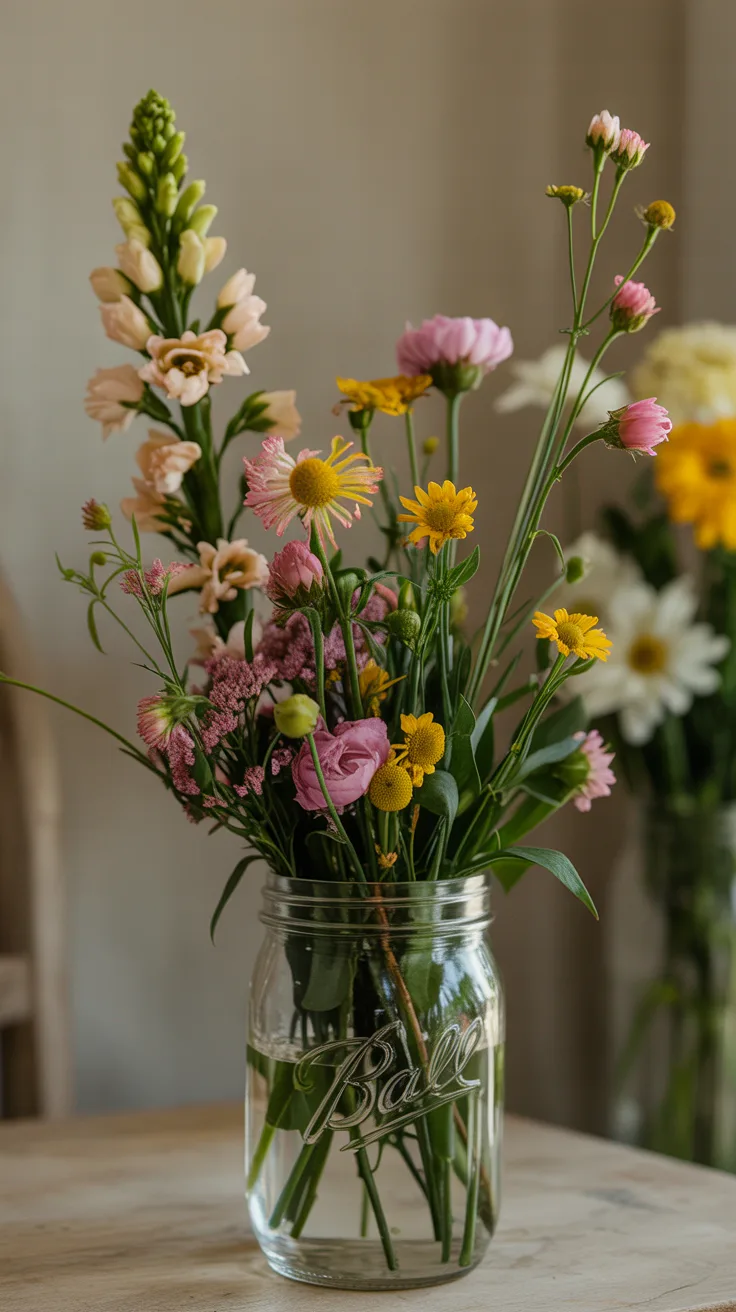
A polished arrangement is less about using expensive flowers and more about proportion, repetition, and thoughtful placement.
- Vary the heights. Avoid cutting every flower to exactly the same length.
- Repeat colors. Distributing the same color in several areas helps the arrangement feel balanced.
- Use different flower sizes. Combining focal blooms with smaller flowers creates depth.
- Turn the jar while arranging. This is especially important when the centerpiece will be viewed from every direction.
- Leave some breathing room. Flowers often look better when individual blooms have enough space to be seen.
- Consider the jar-to-flower proportion. Taller arrangements generally look more graceful when the flowers extend noticeably above the rim without becoming top-heavy.
- Mix stages of bloom. A combination of open flowers and tighter buds can create a more natural garden-picked effect.
Keeping Your Mason Jar Flowers Fresh
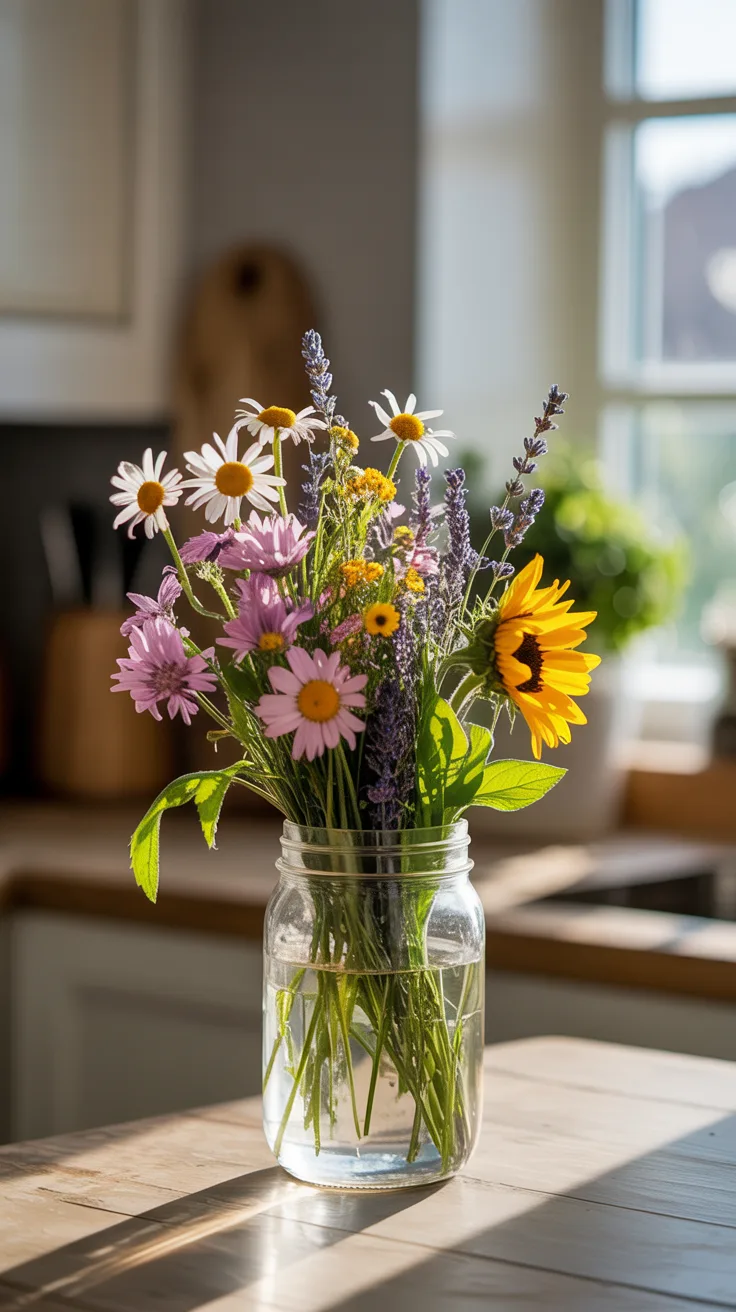
Once the arrangement is finished, a few simple maintenance habits can help the flowers remain attractive for as long as possible.
Fresh Flower Care Checklist
- Check the water level daily.
- Replace cloudy or discolored water promptly.
- Wash the jar before completely refilling it when possible.
- Remove wilted flowers and damaged foliage.
- Re-trim stems when refreshing the arrangement.
- Keep flowers away from strong direct sunlight and heat sources.
- Avoid placing the arrangement directly beside ripening fruit.
You can keep cut-flower food packets on hand for fresh arrangements.
Easy Mason Jar Flower Arrangement Ideas
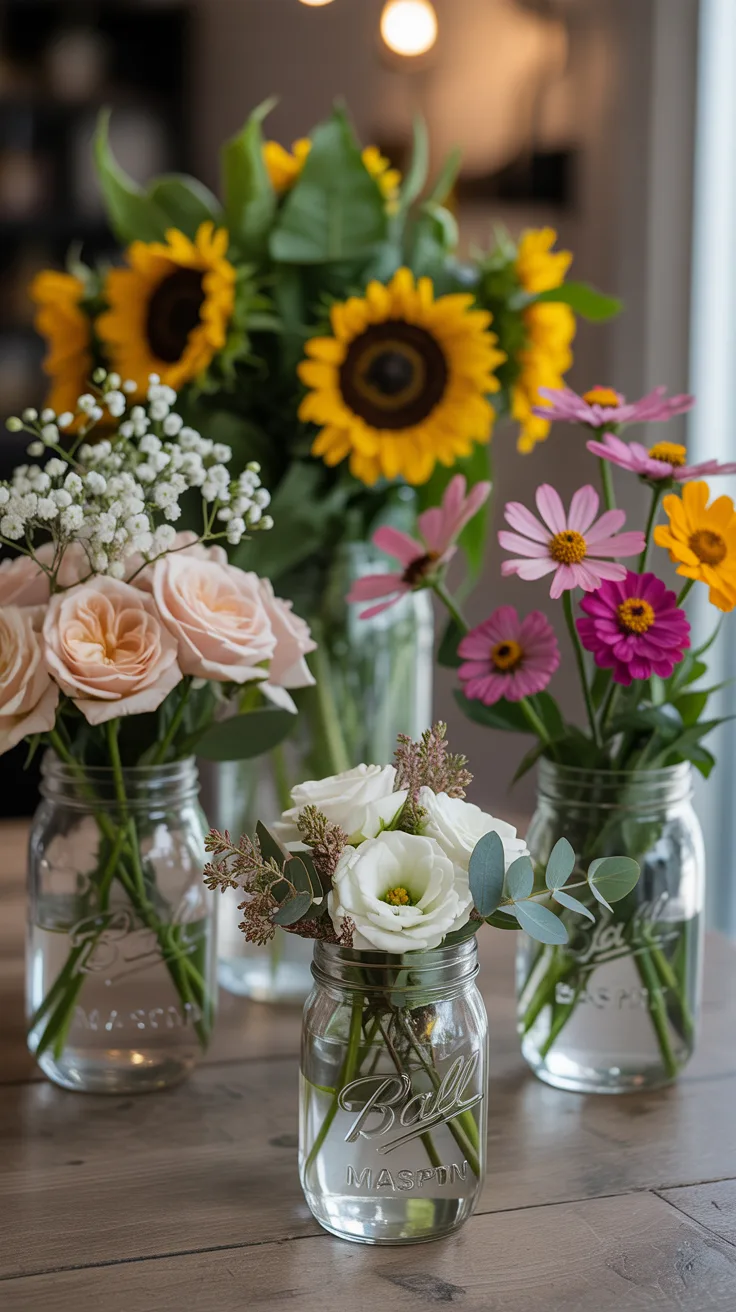
Once you understand the basic technique, mason jars are easy to adapt to different seasons and occasions. Try white flowers with eucalyptus for a simple neutral centerpiece, sunflowers and greenery for late summer, garden roses and baby’s breath for romantic events, or colorful zinnias and cosmos for a casual cottage-garden look.
For weddings or larger gatherings, several smaller mason jar arrangements can often create more impact than one oversized centerpiece. Varying the jar heights slightly can make a grouped display feel collected and natural while still keeping the overall design cohesive.
Common Mason Jar Flower Arranging Mistakes
One of the most common mistakes is using too many flowers. Overfilling the jar makes individual blooms difficult to appreciate and can crush stems together at the opening.
Another issue is leaving foliage underwater. Even a beautiful arrangement can quickly develop cloudy water when leaves begin breaking down below the surface.
Finally, avoid treating every stem the same. Different flowers naturally grow and move in different directions, and allowing some of that movement to remain is what gives a casual mason jar bouquet much of its charm.
Final Thoughts
Creating beautiful flower arrangements in mason jars is a simple skill that gets easier every time you practice. Start with a clean jar, prepare the flowers carefully, establish the overall shape before adding focal blooms, and finish with smaller flowers and greenery. You don’t need perfect symmetry or expensive flowers to achieve an impressive result; thoughtful spacing and good proportions can turn even an inexpensive bunch of seasonal flowers into a centerpiece that feels intentionally designed.
Key Takeaways
- Choose a mason jar size that matches the number and scale of your flowers.
- Remove foliage below the water line before arranging fresh flowers.
- Use sharp floral shears to make clean cuts.
- A floral tape grid can provide extra support for loose stems.
- Build the arrangement in layers instead of adding all the flowers at once.
- Vary flower heights and sizes for a more natural appearance.
- Refresh the water and remove fading blooms to keep the arrangement looking its best.
Frequently Asked Questions
How long will flowers last in a mason jar?
The exact vase life depends on the flower variety and its condition when purchased or cut. Many common cut flowers can remain attractive for several days or longer when kept in clean water and cared for properly.
Do I need to use flower food?
Flower food is not required for creating an arrangement, but commercially prepared cut-flower food can be useful when used according to its directions.
Can I use antique mason jars for flower arrangements?
Yes. Vintage mason jars can make beautiful flower containers, but inspect them carefully for cracks or chips and clean them thoroughly before adding water and flowers.
How do I prevent the water from becoming cloudy?
Start with a clean jar, remove foliage that would sit underwater, and replace the water when it becomes cloudy or dirty. Keeping decaying plant material out of the water is one of the simplest ways to maintain a cleaner arrangement.
What is the best way to clean a mason jar before adding flowers?
Wash the jar thoroughly with warm soapy water and rinse it well. Pay extra attention to residue around the bottom and inside edges of the jar.
Can I use artificial flowers in mason jars?
Absolutely. Artificial flowers work especially well for long-term displays, seasonal decorations, party decor, and areas where maintaining fresh flowers would be inconvenient.
How full should I fill a mason jar with water?
Add enough fresh water to keep the cut ends of the stems comfortably submerged without filling the jar all the way to the rim. Check the level regularly because flowers can consume a surprising amount of water.
What is the best season for mason jar flower arrangements?
Mason jar arrangements work throughout the year. Spring flowers create a soft cottage look, summer wildflowers feel casual and colorful, autumn arrangements pair well with warm seasonal foliage, and winter arrangements can incorporate evergreens and other seasonal greenery.
Can I paint or decorate the mason jar?
Yes. Twine, ribbon, removable decorations, and exterior paint can customize a mason jar, but keep paints and decorative materials away from the water and interior surfaces that come into contact with fresh flower stems.
How many flowers do I need for one mason jar?
The number depends on the size of the flowers and the jar. A small arrangement may need only a handful of stems, while a fuller quart-sized centerpiece may use roughly 10–15 stems when flowers and greenery are counted together.