Introduction to Easter Flowers
There’s something magical about walking into a home decorated with fresh flowers during Easter. I remember as a child, my grandmother would spend hours arranging the most beautiful blooms, and the entire house would transform into a fragrant sanctuary of spring. Over the years, I’ve come to appreciate that Easter flowers aren’t just pretty decorations—they carry deep symbolism that connects us to centuries of tradition and spiritual meaning.
Easter marks a time of renewal, hope, and celebration. The flowers we choose to display during this season tell stories of resurrection, new beginnings, and the triumph of life over darkness. Whether you’re decorating your home, preparing for a church service, or simply wanting to understand the deeper meaning behind these beautiful blooms, understanding the symbolism of Easter flowers can make your celebrations even more meaningful.
In this guide, I’ll walk you through the most beloved Easter flowers, their rich symbolism, and share some practical tips I’ve learned over years of creating Easter arrangements. Trust me, I’ve made plenty of mistakes along the way—like the time I accidentally wilted an entire bouquet of lilies by placing them too close to a sunny window!
The Lily: Purity and Resurrection
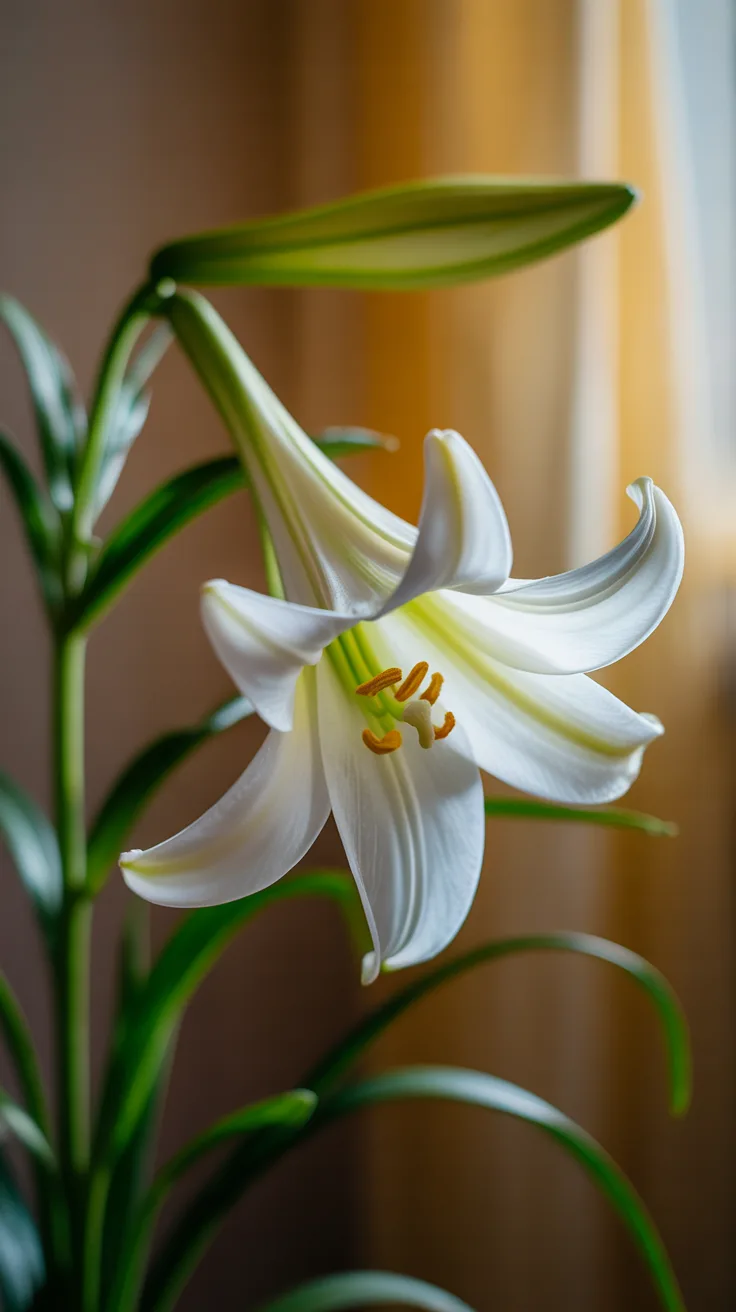
If there’s one flower that immediately comes to mind when we think of Easter, it’s the magnificent white lily. Often called the “Easter Lily,” this trumpet-shaped bloom has become synonymous with the holiday itself. I’ve always been captivated by how the lily’s pure white petals seem to glow, almost as if they’re radiating light from within.
The symbolism behind the Easter Lily runs deep. According to Christian tradition, lilies are said to have sprung up where drops of Christ’s sweat fell during His final hours. The flower’s white color represents purity and virtue, while its trumpet shape symbolizes the herald of resurrection and new life. When I arrange lilies in my home, I’m reminded of the profound message of hope that Easter brings.
- Purity and innocence – The pristine white petals symbolize the pure nature of Christ
- Resurrection and eternal life – The lily’s emergence from a dormant bulb mirrors the resurrection story
- Hope and renewal – These blooms represent the promise of new beginnings
- Divine beauty – Often referenced in scripture as symbols of God’s creation
Pro Tip: When displaying Easter Lilies, remove the orange pollen-covered anthers as soon as the flowers open. Not only does this prevent staining on tablecloths and clothing, but it also helps the blooms last longer. I learned this the hard way after ruining a white Easter dress!
Daffodils: Rebirth and New Beginnings
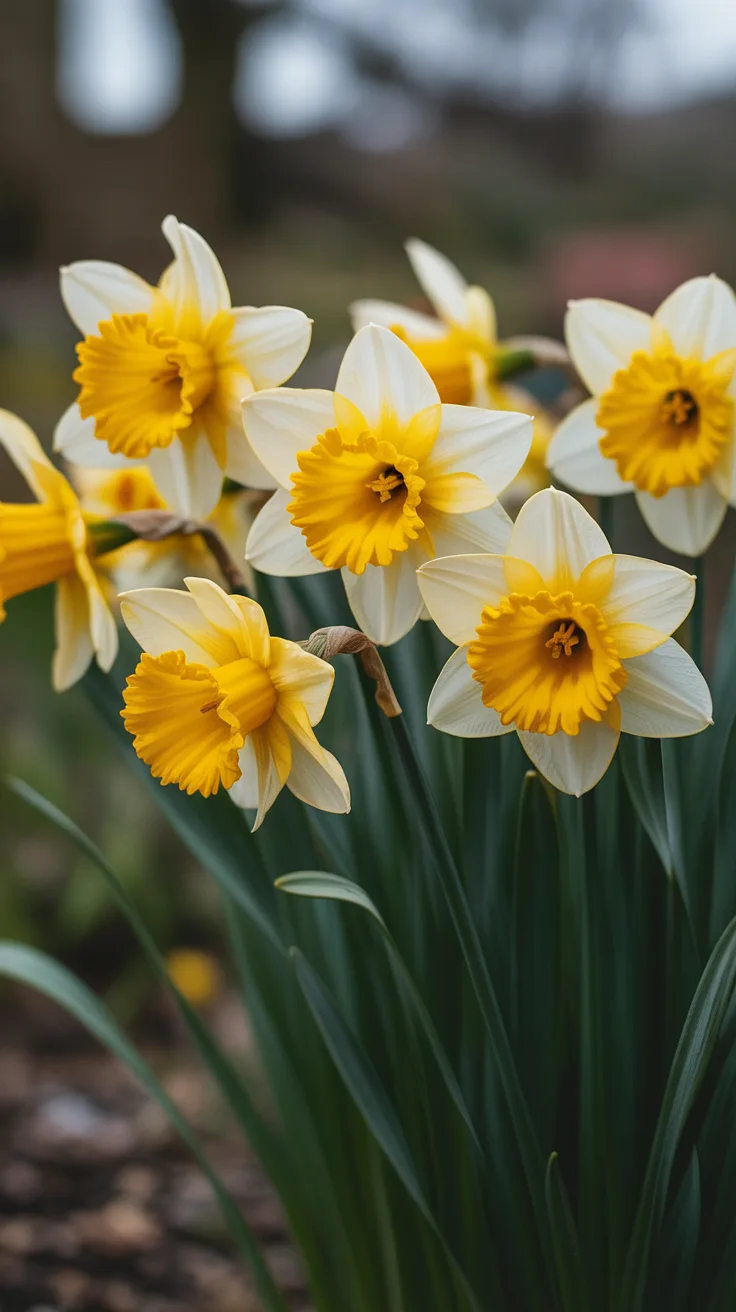
Nothing says “spring has arrived” quite like a cheerful cluster of daffodils nodding in the breeze. These sunny yellow flowers have a special place in my heart because they were the first flowers I ever planted as a child. Watching them push through the cold ground each year felt like witnessing a small miracle.
Daffodils symbolize rebirth and new beginnings, making them perfectly suited for Easter celebrations. In many cultures, they’re among the first flowers to bloom after winter, serving as nature’s announcement that warmer days are ahead. The Welsh even consider the daffodil their national flower and associate it with St. David’s Day, which falls close to the Easter season.
- New beginnings – Their early spring emergence represents fresh starts
- Rebirth and renewal – Symbolizes the cycle of life and resurrection
- Optimism and joy – The bright yellow color evokes happiness and hope
- Prosperity – In some traditions, daffodils are believed to bring good fortune
Pro Tip: Here’s something I wish someone had told me years ago—daffodils release a sap that can be harmful to other cut flowers. Always condition them separately in water for at least 24 hours before combining them with other blooms in an arrangement. Once conditioned, don’t recut the stems, or you’ll need to start the process over!
Tulips: Love and Passion
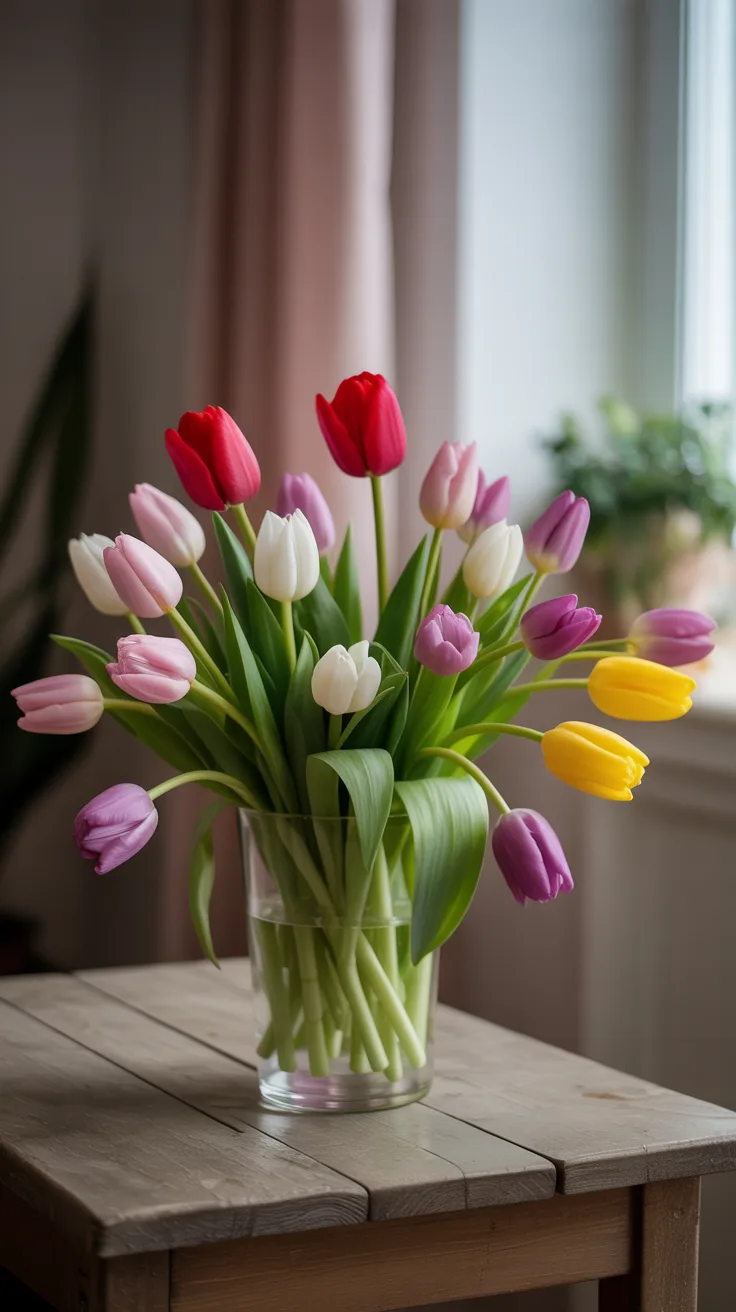
Tulips hold a special place in the world of Easter flowers, bringing elegance and vibrant color to spring celebrations. I fell in love with tulips during a trip to the Netherlands, where endless fields of these gorgeous blooms stretched as far as the eye could see. Since then, they’ve become a staple in my Easter decorating.
What makes tulips particularly fascinating is that different colors carry different meanings. This allows you to craft arrangements that convey specific messages and emotions. Whether you prefer the classic red or the delicate pink varieties, tulips add sophistication and warmth to any Easter display.
- Red tulips – Represent true love and deep passion
- Pink tulips – Symbolize affection, caring, and good wishes
- White tulips – Convey forgiveness, purity, and new beginnings
- Yellow tulips – Express cheerfulness, sunshine, and friendship
- Purple tulips – Associated with royalty, admiration, and respect
Pro Tip: Tulips are phototropic, meaning they continue to grow and bend toward light even after being cut. To keep your arrangement looking balanced, rotate the vase daily. Also, tulips love cold water—add a few ice cubes to the vase to keep them perky and extend their vase life.
Hyacinths: Peace and Serenity
The moment I catch the scent of a hyacinth, I’m instantly transported to Easter mornings of my childhood. These intensely fragrant flowers have an almost magical ability to fill an entire room with their sweet perfume. For me, no Easter celebration is complete without at least one pot of blooming hyacinths.
Hyacinths symbolize peace, serenity, and constancy. Their dense clusters of star-shaped florets come in a rainbow of colors, from deep purple to soft pink to pristine white. In Greek mythology, the hyacinth flower sprang from the blood of Hyacinthus, a youth beloved by Apollo, giving these blooms an additional layer of meaning related to remembrance and devotion.
- Peace and tranquility – Their calming fragrance promotes relaxation
- Sincerity – Represents genuine emotions and truthfulness
- Constancy – Symbolizes steadfast love and loyalty
- Playfulness – The cheerful blooms evoke a sense of joy
Pro Tip: If you find the fragrance of hyacinths overwhelming (some people do!), place them in a well-ventilated area or near an open window. You can also choose white varieties, which tend to have a slightly milder scent than the purple or blue ones.
Pro Tips for Choosing Easter Flowers
After years of creating Easter arrangements—and yes, making plenty of mistakes—I’ve gathered some wisdom I’d love to share with you. Choosing the right flowers can elevate your Easter celebration from ordinary to extraordinary.
First, always consider the setting where your flowers will be displayed. For church arrangements, traditional choices like lilies and white tulips work beautifully. For home decorating, feel free to get creative with colorful combinations of daffodils, tulips, and hyacinths. I once made the mistake of using heavily scented flowers for a dining table centerpiece, and let’s just say the fragrance competed with our Easter ham!
Timing is everything when purchasing Easter flowers. Buy your blooms 2-3 days before Easter and choose flowers that are still partially closed. This way, they’ll be at their peak beauty on Easter Sunday. I always visit my local florist early in the week to get the freshest selection.
Consider creating a meaningful arrangement by combining flowers with complementary symbolism. Pairing lilies (resurrection) with daffodils (new beginnings) and tulips (love) creates a bouquet that tells the complete Easter story. Add some greenery like eucalyptus or ferns to represent eternal life and growth.
Pro Tip: Don’t overlook potted plants! Potted Easter flowers like hyacinths and lilies can be planted in your garden after the holiday, giving you years of enjoyment. I have a corner of my garden dedicated entirely to “recycled” Easter plants, and it’s become one of my favorite spots.
Frequently Asked Questions
What is the most popular Easter flower?
The Easter Lily is undoubtedly the most popular and iconic flower associated with Easter. Its pure white blooms and trumpet shape perfectly symbolize the resurrection and purity central to the Easter celebration. You’ll find these beautiful flowers adorning churches and homes throughout the Easter season.
How can I keep Easter flowers fresh longer?
To extend the life of your Easter flowers, change the water every two days, trim the stems at an angle, and keep arrangements away from direct sunlight, heating vents, and ripening fruit. Adding flower food to the water and removing any leaves that fall below the waterline will also help prevent bacterial growth.
Are there any traditional Easter flowers specific to certain cultures?
Yes! Different cultures have their own Easter flower traditions. In the UK and Wales, daffodils are closely associated with Easter and spring celebrations. In parts of Europe, pussy willows are traditional Easter decorations. Mediterranean countries often use olive branches, while in some Scandinavian countries, birch twigs decorated with feathers are popular.
What colors are most associated with Easter flowers?
White, yellow, pink, and lavender are the colors most commonly associated with Easter flowers. White symbolizes purity and resurrection, yellow represents sunshine and new beginnings, pink conveys joy and gratitude, and lavender suggests peace and serenity. Pastel shades in general reflect the gentle beauty of spring.
Can Easter flowers be used for other occasions?
Absolutely! Most Easter flowers are versatile and appropriate for many occasions. Lilies are popular for weddings and sympathy arrangements, tulips work beautifully for birthdays and anniversaries, daffodils brighten any spring celebration, and hyacinths make lovely housewarming gifts. The key is choosing colors and arrangements that suit the specific occasion.